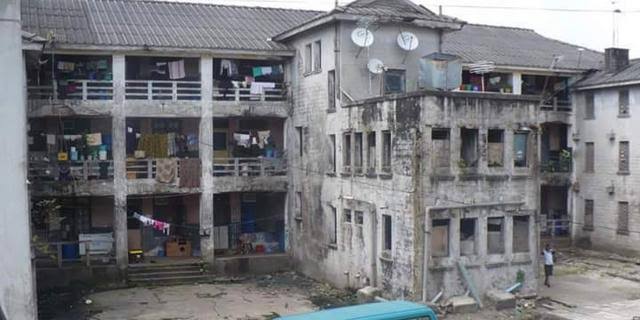
*Thousands of officers live in leaking, overcrowded, barracks nationwide
*Shares rooms with rodents, snakes in colonial structures’
*Police personnel spend personal funds on repairs
By Soni Daniel
When over 1,000 police officers and their families were forcefully displaced from the historic Central Police Station (CPS) Barracks in Onitsha in 2013 following a controversial land dispute, many Nigerians viewed it as an isolated crisis. But it wasn’t.
The images were disturbing. Policemen who spent decades serving the nation were suddenly packing their belongings under the supervision of court bailiffs. Women who operated small businesses within the barracks watched bulldozers flatten their shops. Children who knew no other home were forced into uncertainty.
Thirteen years later, the Onitsha incident has become more than a local land dispute. It has emerged as a symbol of a much deeper national crisis—the collapse of police housing infrastructure across Nigeria.
Today, from Onitsha to Maiduguri, from Ibadan to Calabar, from Umuahia to Lokoja, thousands of officers and their families are living in conditions many describe as unfit for human habitation.
Investigations by Vanguard across the country reveal a disturbing pattern of leaking roofs, collapsing buildings, broken sewage systems, water shortages, overcrowding, open defecation and severe accommodation shortages.
Ironically, the men and women entrusted with protecting lives and property are themselves living in environments that threaten their safety, health and dignity.
Onitsha: The Incident That Exposed a National Problem
The crisis began when the Ekwerekwu family of Okposieke Kindred in Onitsha successfully secured a court judgment claiming ownership of the land occupied by the ancient police barracks.
According to the family, the land had been leased to the police approximately 100 years earlier and the lease had expired. The enforcement exercise that followed led to the demolition of several structures and the displacement of hundreds of police families.
While police authorities maintained that only illegal structures were removed, affected officers disagreed. Many insisted they had been paying accommodation deductions from their salaries and therefore could not understand how they suddenly became illegal occupants.
The incident forced many officers into rented accommodation across Onitsha, exposing a problem that remains widespread today—the inability of the Nigeria Police Force to provide adequate housing for its personnel.
Ironically, some sections of the Onitsha barracks remain occupied today because only portions of the property were recovered. Yet the scars remain. For many officers, Onitsha became proof that police accommodation in Nigeria rests on shaky foundations—physically, legally and institutionally.
A National Housing Emergency
The Nigeria Police Force is one of Africa’s largest security institutions, with hundreds of thousands of personnel spread across the federation. However, available police housing has failed to keep pace with growing manpower.
Many barracks were built during the colonial era or shortly after independence. Most have exceeded their lifespan. Years of neglect, poor maintenance culture, inadequate funding and bureaucratic bottlenecks have left many facilities in varying stages of decay.
Across Nigeria, the housing crisis confronting police personnel falls into three categories: Dilapidated barracks, insufficient accommodation and legal disputes over land ownership. The result is that thousands of officers either live in dangerous structures or are forced into private rented accommodation at enormous personal cost.
Nightmare facing Police officers in S-South barracks
Across Cross River, Rivers, Akwa Ibom, Bayelsa and Edo states, Vanguard findings revealed a common pattern of neglect: collapsing roofs, broken sewage systems, blocked drainage channels, overcrowded apartments, water shortages and rodent infestations.
For officers who spend their days confronting armed robbers, kidnappers, cultists and other criminals, home should offer refuge and comfort. Instead, many return from duty to environments that threaten their health, dignity and safety.
Cross River: Where open defecation has become way of life
Perhaps nowhere is the housing crisis more shocking than at the Akim and Moore Road Police Barracks in Calabar. What should ordinarily serve as secure residential quarters for police personnel have become symbols of institutional neglect.
A visit to both barracks revealed buildings that have suffered decades of abandonment. Roofs leak profusely during rainfall. Broken railings hang dangerously from storey buildings. Toilets are abandoned and unusable. Sewage systems have collapsed, while potable water is virtually non-existent.
The result is a humanitarian crisis unfolding within facilities owned by one of Nigeria’s foremost security institutions.One police operative who has lived in Akim Barracks for eight years painted a grim picture.
According to him, he has never used the toilet facilities in the barracks since moving there.
“Since I started living here eight years ago, I have never for once used the toilet. I either use facilities at my place of work or wake up very early to use the big drainage opposite the barracks,” he disclosed. His confession reflects the reality facing many residents.
Between 3:30 a.m. and 5 a.m., the drainage channel opposite the barracks reportedly becomes a makeshift public toilet as residents seek privacy before daylight.
“It is embarrassing, but we have no choice,” another resident lamented.
Water scarcity has compounded the misery. Residents often fetch water from nearby churches and neighbouring communities, carrying gallons over long distances to meet daily needs.
Another officer described the situation as unbearable. “We don’t have water. We don’t have toilets. We don’t have decent bathrooms. When rain falls, our roofs leak badly. Sometimes you return from work and discover that your property has been soaked by rainwater.”
The officer disclosed that residents now fund repairs themselves because official intervention rarely comes. According to him, some blocks housing 27 families each contributed N100,000 per household for emergency repairs, raising over N2.7 million from personal resources. Despite these efforts, the barracks remain largely dilapidated.
Vanguard observed overflowing sewage, abandoned toilets, broken railings and visibly deteriorating buildings throughout the premises. The situation at Moore Road Barracks is hardly different.
Constructed more than five decades ago, the buildings have received little meaningful renovation. Residents continue to battle leaking roofs, inadequate water supply and poor sanitation. One occupant summed up the experience bluntly: “We live like animals. It is appalling.”
Rivers: Officers forced to renovate
In Rivers State, police personnel have effectively become maintenance contractors for government-owned accommodation. At the police barracks attached to Olu Obasanjo Police Station in Port Harcourt, buildings are visibly deteriorating.
Many roofs have become dangerously weak after decades of exposure to the elements. A police officer serving in the state command disclosed that occupants now spend personal funds on repairs simply to make the apartments habitable. According to him, without those self-funded interventions, many of the buildings would have become uninhabitable.
The situation is reportedly worse at the Mile One Police Barracks where several structures have deteriorated significantly. Some of the buildings are old mud structures whose appearance reflects decades of neglect. Residents say only piecemeal repairs have prevented total collapse.
Akwa Ibom: Buckets replace ceilings during rainfall
At the A Division Police Barracks along Wellington Bassey Way in Uyo, signs of structural distress are impossible to miss. Paint peels from walls, ceilings sag under accumulated rainwater and drainage channels are blocked. Rusted roofing sheets are held in place with heavy stones.
Broken windows covered with pieces of cloth serve as makeshift replacements for damaged louvres. For many residents, this has become normal life.
One sergeant who has lived in the barracks for seven years said rainfall brings anxiety rather than relief. “Every rainy season we place buckets in the sitting room because the roof leaks,” he said.
Another resident explained that accommodation shortages have worsened living conditions. According to him, apartments designed for a single family now house multiple households. Broken plumbing has rendered several toilets useless, forcing residents to improvise.
Vanguard observed collapsing verandas, overgrown surroundings and visible structural cracks on several buildings.
Bayelsa: Sharing apartments with rodents
In Yenagoa, the Bayelsa State Police Command Barracks presents another troubling picture. Situated in Ovom, at the heart of the state capital, the barracks appears forgotten despite its strategic location. The facility lacks proper fencing, making it vulnerable to unrestricted movement.
Footpaths crisscross the premises, giving it the appearance of an abandoned public settlement rather than a secured police facility. Most buildings have broken doors, shattered windows and damaged roofs. Occupants use old clothes, cardboard and wooden planks to cover exposed openings.
Although the barracks was built shortly after Bayelsa State was created in 1996, poor maintenance has reduced it to a shadow of its original design. A new recruit who recently inspected the facility reportedly stated that he would reject accommodation there if offered.
Residents say nearly every essential facility has broken down. “No water, blocked drainages, broken toilets, damaged kitchens and collapsed ceilings. We are literally sharing these apartments with rodents,” said the wife of a serving officer. The barracks, designed to house less than 200 personnel, now struggles with aging infrastructure and inadequate maintenance.
Edo: Aging facilities await renewal
Across Edo State, police barracks bear the marks of age and prolonged use. Many facilities are as old as the police formations they serve. Although minor renovations have been undertaken in some locations, much of the maintenance burden still falls on occupants. At Ogida and Esigie Barracks in Benin City, residents were reluctant to discuss conditions publicly, an indication of lingering frustrations.
However, investigations revealed that several structures require significant rehabilitation. Unlike some states where complete abandonment appears evident, Edo offers a glimpse of gradual improvement. Plans are underway to upgrade Ogida Barracks, while Mopol 82 Squadron is expected to relocate to a new barracks in Uromi.
Yet many officers insist that much more remains to be done before living conditions can be considered acceptable.
Inside rot, ruin of Police barracks across Northern states
If the condition of police barracks in southern Nigeria raises concerns about neglect, the situation across many northern states presents an even more troubling picture.
Across the North-East, North-West and North-Central zones, Vanguard investigations found police personnel living in crumbling buildings, battling water shortages, exposed sewage systems, collapsing roofs and severe infrastructural decay.
From the insurgency-ravaged communities of Borno to the aging barracks of Kaduna, Minna and Lokoja, one reality stands out: many police officers are carrying out the difficult task of protecting millions of Nigerians while living in conditions that often fall below acceptable standards for human habitation.
For some officers, the barracks have become death traps. For others, they are simply the only alternative to the crushing cost of renting accommodation outside.
Benue: A disaster waiting to happen
Perhaps one of the most alarming examples can be found at the Mopol 13 Barracks in Makurdi, Benue State. The facility, one of the largest police residential quarters in the state, has become a symbol of neglect.
Several of the storey buildings and bungalows show visible signs of structural distress. Foundations are weakening. Pillars are cracking. Roofs have been blown off by years of exposure to harsh weather conditions. Yet hundreds of officers and their families continue to occupy the buildings.
A serving officer who spoke anonymously described life in the barracks as living on borrowed time. “This place is not habitable, especially the storey buildings. They look like they can collapse at any moment, but many of us cannot afford accommodation outside the barracks,” he said.
During the rainy season, residents reportedly spend sleepless nights battling leaking roofs and flooding. “Whenever it rains, water enters our rooms. Sometimes we stay awake throughout the night trying to protect our belongings,” another officer lamented.
Although some occupants have attempted repairs with personal funds, many structures require complete rehabilitation.
Borno: Barracks scarred by insurgency, neglect
In Borno State, years of Boko Haram and ISWAP insurgency left many police barracks damaged or completely destroyed. While some facilities have survived, many continue to suffer from neglect.
At the Police Crack Squad Barracks along Airport Road in Maiduguri, several buildings are in an advanced state of decay. Residents complain about inadequate electricity supply, poor water systems and the absence of recreational facilities. The nearby Police Officers’ Mess also reflects years of underinvestment.
Many of the buildings were constructed decades ago and now struggle under the weight of age and inadequate maintenance. Ironically, these are facilities occupied by officers operating in one of Nigeria’s most challenging security environments.
Security experts argue that officers battling terrorism deserve better welfare support than what currently exists.
Kogi: Water scarcity, broken facilities
The Banda Police Barracks in Lokoja, Kogi State, has become a source of concern among residents and officers alike. The facility lacks adequate water supply, while several toilets and drainage systems have become dysfunctional.
An officer who spoke to Vanguard said years of neglect have left many structures in poor condition. “The buildings are old and there has been very little maintenance. During rainfall, some of the roofs leak badly,” he said.
Blocked drainage channels have further compounded sanitation problems within the barracks. Yet despite these conditions, demand for accommodation remains high because officers cannot afford rising rents in Lokoja. The situation illustrates a recurring challenge across Nigeria: officers often choose dilapidated barracks over expensive private housing.
Adamawa: Four decades of decay
In Adamawa State, many police barracks were built during the administration of former President Shehu Shagari between 1979 and 1983. More than forty years later, many of those buildings have received little meaningful maintenance.
Across Yola and other local government areas, police barracks display the same signs of decay: broken sewage systems, exposed waste channels, cracked walls, damaged roofs and deteriorating doors and windows. Several facilities in local government headquarters have reportedly become breeding grounds for domestic animals.
Some residents have converted open spaces within the barracks into livestock areas, highlighting the extent of infrastructural decline. Officers say many of the facilities no longer meet modern housing standards.
Kaduna: Buildings crying for attention
In Kaduna State, the story is one of aging infrastructure struggling to survive. At the barracks along Independence Way and the New Barracks in Kawo, buildings have suffered years of wear and tear. Broken doors, shattered windows, damaged sanitary facilities and deteriorating roofs are common sights. Residents fear the rainy season because many structures become vulnerable to leaks and possible collapse.
One resident appealed for urgent intervention.“These buildings were constructed many years ago and have received little maintenance. We need urgent rehabilitation before something tragic happens,” he said. The concerns are particularly significant because Kaduna remains one of the country’s major security centres.
Niger State: A barracks without security
The irony of the Minna Police Barracks is difficult to ignore. A facility designed to house security personnel and train police recruits lacks one of the most basic security requirements — perimeter fencing. Located along the Minna-Paiko-Suleja Road, the barracks also serves as a police training school.
Yet the entire complex is in deplorable condition. Roofs have blown off. Walls are peeling. Doors hang loosely from broken hinges. Soakaway pits have collapsed, exposing residents to serious health hazards. The absence of fencing makes the barracks vulnerable to intruders and criminal activity.
Domestic animals roam freely around the premises, further contributing to poor sanitary conditions. Residents say the foul odour from animal waste and exposed sewage has become part of daily life.
Kebbi: Living in ruins
The police barracks in Nasarawa area of Birnin Kebbi presents one of the starkest examples of infrastructural collapse. Built more than fifty years ago, portions of the facility have deteriorated beyond recognition. Some sections constructed with mud have partially collapsed and now pose serious risks to occupants.
Despite the danger, some retired officers continue to live there while awaiting their retirement benefits. The sight of elderly former policemen living in such conditions raises uncomfortable questions about welfare provisions within the force.
Plateau: Living in decay
In Plateau State, officers stationed at Mopol 8 Barracks in Anguldi, Jos, face a difficult contradiction.
Many of them are involved in responding to recurring security crises across the state, yet they return home to dilapidated accommodation. Cracked walls, leaking roofs and failing infrastructure dominate sections of the barracks.
A police officer described the situation simply: “The area is bad.” His wife was more direct.
“With all the insecurity in Plateau, our husbands risk their lives every day. It is painful that they return to accommodation that is not fit for them and their families,” she said. Although some blocks within the barracks have been renovated, many others remain neglected. The uneven pattern of development has left many residents frustrated.
Ilorin: An eyesore
In Ilorin, two four-storey police barracks blocks at Challenge area have become visible symbols of neglect. The structures are over forty years old and have received little rehabilitation.
Windows are broken. Louvres have disappeared. Walls are deteriorating. Water supply is poor, while toilet facilities have become largely unusable. According to officers, some residents now rely on neighbouring facilities or resort to open spaces when toilets become inaccessible. The conditions stand in sharp contrast to expectations for official accommodation provided for law enforcement personnel.
SOUTH EAST – The decay in South-East
While the South-East has largely escaped the images of collapsed police barracks and open defecation that characterize some parts of the country, investigations across the region reveal a different but equally troubling reality: aging infrastructure, deteriorating living conditions and a severe shortage of accommodation for police personnel.
From Enugu to Umuahia and Abakaliki, officers complain of leaking roofs, failing ceilings, inadequate housing capacity and barracks that have struggled to keep pace with modern standards.
The findings suggest that beneath the relatively calm exterior of some police formations lies a welfare challenge that continues to affect the morale and wellbeing of officers and their families.
Enugu: Aging Barracks Cry Out for Rescue
In Enugu State, many police officers acknowledge efforts by the Inspector-General of Police, Kayode Egbetokun, and the state Commissioner of Police to improve welfare through infrastructure projects.
One of such efforts is the construction of new police barracks at Ozalla Police Station, a project many officers regard as a positive development.However, those efforts have done little to erase concerns over the condition of existing barracks across the state.
A junior police officer who spoke anonymously said many residential facilities occupied by officers have become increasingly unsafe because of age and lack of maintenance.
According to him, leaking roofs and weakened structures have become common features in several barracks. “Many of the buildings are old. Some roofs are already collapsing and the condition of the structures is becoming dangerous for officers and their families,” he said.
The officer commended the ongoing intervention projects but insisted that more urgent action was required. “There is no doubt that efforts are being made, but much more needs to be done. The safety of officers living in these barracks should be a priority.”
A visit to some police residential quarters in Enugu revealed visible signs of deterioration.
Several buildings showed evidence of prolonged exposure to the elements. Roof sheets appeared worn out, while some ceilings had begun to cave in. Officers expressed fears that without immediate renovation, the situation could worsen during the rainy season.
Another concern raised by personnel is accommodation shortage. With the rising cost of rent in Enugu metropolis, many officers who cannot secure barracks accommodation struggle to find affordable alternatives. Consequently, there have been growing calls for the construction of additional barracks to accommodate the increasing number of personnel posted to the state.
Umuahia: A living museum of neglect
If Enugu highlights the problem of aging infrastructure, the Police Barracks at the Central Police Station in Umuahia presents perhaps the most striking example of institutional neglect in the South-East.
Located in the heart of the Abia State capital, the barracks stands in sharp contrast to the city’s growing urban landscape. Hidden behind perimeter walls is a residential facility that appears trapped in another era. Apart from a lone two-storey block of flats, most of the buildings are relics of colonial construction.
Years of neglect have left visible scars on the structures. Walls are stained by age. Windows are shattered. Wooden fittings are worn out. Roofs have deteriorated. Yet these aging buildings remain home to officers and their families.
A source within the barracks described the environment as one that has been forgotten by time. According to the source, some of the buildings were originally constructed without modern toilet facilities. Occupants were forced to create their own sanitation systems over the years.
“You can see that these buildings had no toilets from the beginning. The residents had to provide toilet facilities themselves,” the source explained.
The revelation highlights the antiquity of the structures. Residents recalled that in earlier decades, waste disposal relied on a primitive bucket collection system that has long disappeared from modern urban life.
Yet traces of that outdated arrangement remain visible in the design of some buildings.Despite the obvious decay, life continues within the barracks. While some residents have installed personal water tanks connected to private boreholes, others continue to struggle for access to water.
Perhaps the most disturbing sight is the transit camp meant for officers on transfer. What was designed as temporary accommodation has become a symbol of prolonged neglect. The structure contains worn-out beds, damaged ceilings and broken windows. Cracks stretch from the roof to the foundation, raising fears of structural failure. Sections of the ceiling have already collapsed.
The condition of the facility paints a troubling picture of the welfare realities confronting many officers. According to residents, those who can afford it have abandoned the barracks altogether and moved into rented apartments across Umuahia. The barracks’ only redeeming quality, one resident remarked, is the security associated with living inside a police facility.
Ebonyi: When Barracks Can No Longer Accommodate Officers
Unlike Enugu and Umuahia, where the primary concern revolves around dilapidated infrastructure, the major challenge in Ebonyi State is inadequate accommodation.
At the Police Headquarters Barracks in Abakaliki, the environment is relatively clean and orderly.
The challenge, however, is that the available accommodation can no longer meet demand. The number of officers serving in the state far exceeds the housing capacity of the barracks. As a result, many personnel have been forced to seek accommodation in private residences across the city. A police officer who spoke to Vanguard described the situation as a growing welfare concern. According to him, the accommodation shortage has scattered officers across different parts of Abakaliki, undermining the traditional concept of barracks life.
“In reality, police officers are supposed to live within barracks for security reasons and easier coordination of operations. But many of us now live outside because there are simply not enough houses,” he explained. The situation is worsened by the high cost of accommodation in the state capital. Although officers receive housing allowances, many say the amounts are grossly inadequate compared to prevailing market rates.
An officer cited the example of personnel receiving approximately N300,000 as annual housing support while modest two-bedroom apartments now cost between N500,000 and N800,000 depending on location. “With the cost of rent today, that allowance cannot secure decent accommodation,” he lamented.
The result is financial strain on many officers, some of whom spend a significant portion of their salaries on rent. Others settle for accommodation in less secure neighbourhoods, exposing themselves and their families to additional risks.
S-West barracks: Decaying Structures, Overcrowding
The South-West is widely regarded as Nigeria’s economic nerve centre. Home to some of the country’s most developed cities, bustling commercial hubs and major government institutions, the region projects an image of growth and modernity.
Yet hidden behind the walls of many police formations lies a different reality.
Across Oyo and Ogun states, investigations reveal police barracks and divisions struggling with decades-old infrastructure, overcrowding, poor maintenance and deteriorating living conditions that continue to undermine the welfare of officers and their families.
For many police personnel, the challenge is not merely the difficult nature of their work but the condition of the homes and workplaces they return to after daily duty.
The situation highlights a contradiction at the heart of Nigeria’s security architecture: while officers are expected to maintain law and order in some of the country’s busiest urban centres, many operate from facilities that have fallen far below acceptable standards.
Oyo: Mokola Police division crying for attention
At the Mokola Division of the Nigeria Police Force in Ibadan, one of the busiest police formations in Oyo State, years of neglect have left visible scars on the facility.
A visit to the division reveals aging buildings struggling under the weight of time and inadequate maintenance.
Leaking roofs, cracked walls, peeling paint and outdated facilities dominate the landscape.
What should ordinarily be a modern security facility serving one of Ibadan’s busiest districts now presents a picture of deterioration that has become difficult to ignore.
Residents and community members familiar with the division expressed concern over the state of the infrastructure. Many argued that the physical condition of the facility does not reflect the critical security role it plays within Mokola and neighbouring communities.
Several police officers who spoke anonymously described the situation as frustrating. According to them, years of inadequate maintenance have left portions of the facility uncomfortable and, in some cases, unsafe. “The buildings are old and many sections need urgent rehabilitation,” one officer disclosed. Whenever there is heavy rainfall, some offices become difficult to use because water leaks through the roof.”
The officers argued that poor working and residential conditions inevitably affect morale.
While they remain committed to their duties, many believe that better facilities would improve productivity and enhance public confidence in law enforcement institutions.
Security experts have long maintained that the quality of infrastructure available to officers plays a significant role in operational efficiency.
An officer who spends the night in a leaking room or reports to a poorly maintained office is unlikely to perform at the same level as one operating in a conducive environment.
For personnel at Mokola Division, the demand is simple: comprehensive renovation and modernization of facilities that have long outlived their original design expectations.
Ogun: Burden of decades of neglect
If Mokola illustrates the challenges confronting police facilities in Oyo State, the condition of the Ibara Police Barracks in Abeokuta tells a broader story about police welfare in Ogun State.
Located in the Isale-Igbehin area of Abeokuta South Local Government Area, the barracks has become synonymous with infrastructural decay and poor living conditions.
Years of neglect have left many of the buildings visibly distressed.
Cracked walls, leaking roofs, damaged drainage systems and deteriorating sanitary facilities have become defining features of the residential quarters.
A visit to the barracks revealed a community struggling to survive within an environment many residents described as unfit for human habitation. Some occupants have resorted to makeshift repairs to keep their homes standing. Wooden planks, nylon sheets and improvised supports now serve as emergency solutions to problems that ideally require professional intervention.
In several apartments, residents use plastic containers and buckets to collect rainwater that pours through damaged roofs during storms.
For families living in the barracks, the rainy season often brings anxiety rather than relief.
“Once the rains begin, many residents hardly sleep. You remain alert throughout the night because you are worried about roof leakages and possible structural failures,” a resident told Vanguard
Beyond the physical deterioration of the buildings, environmental conditions within the barracks have also become a major concern. Blocked drainage systems and stagnant water create breeding grounds for mosquitoes and other disease-carrying organisms.
Poor waste disposal arrangements further compound sanitation challenges. Residents fear that the situation poses long-term public health risks for officers, their spouses and children.
Why barracks matter to national security
Security experts warn that poor police accommodation is not merely a welfare issue. It is a national security concern and barracks provide more than housing.
They ensure rapid mobilisation, coordinated response and secure living conditions for officers. When personnel are scattered across cities because barracks cannot accommodate them, operational effectiveness suffers.
Morale declines and response times may increase. Financial pressures mount and in some cases, officers become vulnerable to compromise and psychological stress.
The conditions uncovered across Nigeria point to one unavoidable conclusion: the country faces a police barracks emergency. What is required is a comprehensive national police housing renewal programme involving.