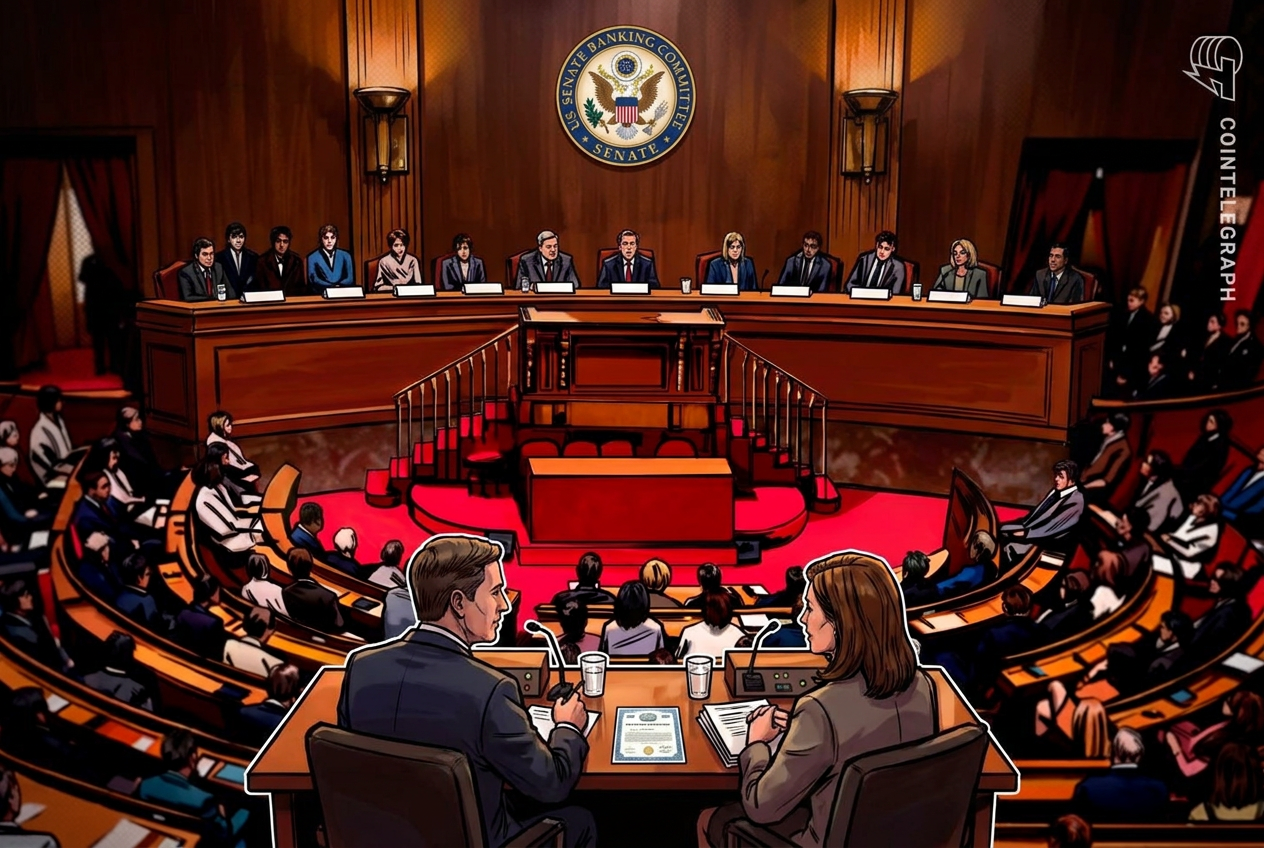
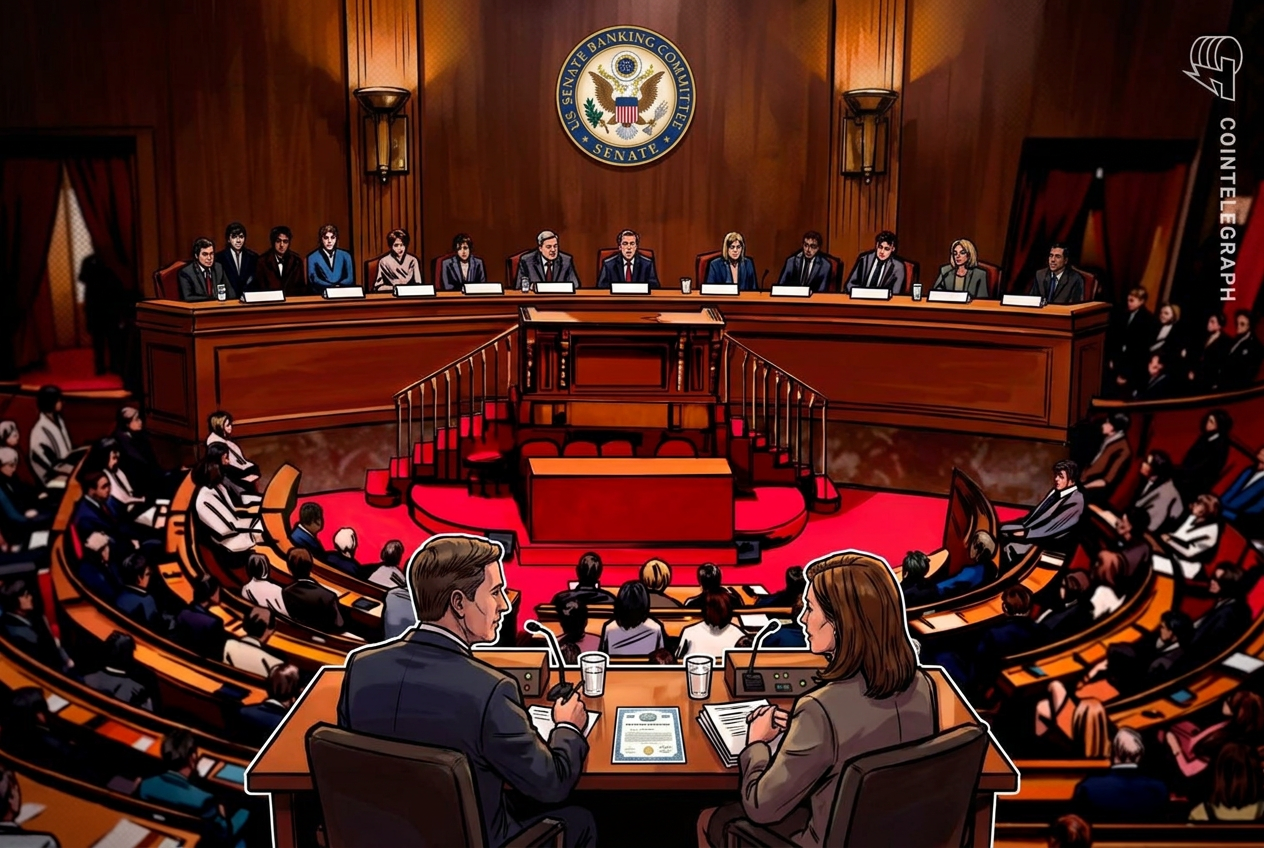
President Donald Trump’s nominees to fill two vacancies at the US Securities and Exchange Commission (SEC) faced questions about investor protections, regulatory oversight and financial innovation during a Senate confirmation hearing Thursday, including scrutiny of the agency’s approach to tokenized securities.
Kristin Johnson, Trump’s Democratic nominee, backed formal rulemaking to address concerns about the agency’s exemption for tokenized stock trading.
“I feel strongly that regulation is made better through the notice and comment period,” Johnson told the Senate Banking Committee in response to Democratic Senator Angela Alsobrooks. She added that she would welcome the opportunity to address issues covered by the exemption through that process.
The SEC’s Sept. 17 exemption lets qualifying platforms trade blockchain-based versions of US-listed shares without registering as securities exchanges under certain conditions. The order took effect immediately and invites comments on possible changes.
Johnson, a former Commodity Futures Trading Commission commissioner, appeared alongside Republican Steven Levine, a former aide to SEC Commissioner Mark Uyeda. If confirmed, they would bring the five-member commission to four members, with three Republicans and one Democrat.
The hearing comes as the SEC has scaled back enforcement activity and pursued regulatory changes intended to accommodate digital assets, including efforts to facilitate tokenized securities that have drawn scrutiny from lawmakers and market participants.
Companies reject tokenized stock listings
The measure has drawn objections from publicly traded companies, with 67 opposing the tokenization of their shares on the OKXICE platform, according to a Nov. 5 public notice.
Johnson also cited concerns about Anti-Money Laundering and Know Your Customer compliance, noting that objections to the exemption extended beyond investor protection.
Levine, meanwhile, said he had not closely studied the innovation exemption but understood it to be time-limited and include investor protections. He emphasized that Congress had authorized the SEC to grant exemptions from federal securities laws when doing so serves the public interest and remains consistent with investor protection requirements.
He pointed to exchange-traded funds as an example of financial innovation that initially developed through regulatory exemptions before becoming subject to broader agency rules.
Related: Robinhood’s Tenev warns US tokenization uncertainty deters ‘serious assets’
Senate weighs bipartisan SEC appointments
If confirmed, Johnson would become the SEC’s only Democratic commissioner, a development some in the crypto industry believe could strengthen the agency’s approach to regulation.
“Crypto isn’t a partisan issue, and the rules that come out of a bipartisan commission will stand on firmer footing,” Jessica Martinez, US policy director at digital asset infrastructure company Fireblocks, told Cointelegraph.
Martinez added that even minority commissioners can influence policy by challenging proposals and pushing for unresolved issues to be addressed before rules are finalized.
Senators have until noon Friday to submit additional written questions to the nominees, with responses due by 5:00 pm ET on Nov. 24, according to the committee’s closing remarks.
The nominations could then advance to a committee vote before being considered by the full Senate. Both nominees would require Senate confirmation before taking their seats at the SEC.
Magazine: How to preserve wealth and access funds during a national emergency