Check out what’s clicking on FoxBusiness.com.
The Trump administration will ban imports of Canadian dairy products, most alcoholic beverages and motorcycles, the White House announced Tuesday, marking a sharp escalation in the trade dispute between the neighboring countries.
The restrictions will take effect in three weeks, according to the White House. The move came hours after Canada imposed retaliatory tariffs on $20 billion worth of U.S. imports.
The latest action deepens a trade conflict between two of North America’s largest trading partners, with both governments imposing new measures despite their closely integrated economies and longstanding commercial relationship.
President Donald Trump also directed the General Services Administration to declare Canadian products ineligible for long-term U.S. government contracts until Canada allows what the White House called “full and fair reciprocity” for American products.
CANADA’S 20% TARIFFS ON US GOODS LIKE MILK, STEEL AND GOLF CLUBS TAKE EFFECT
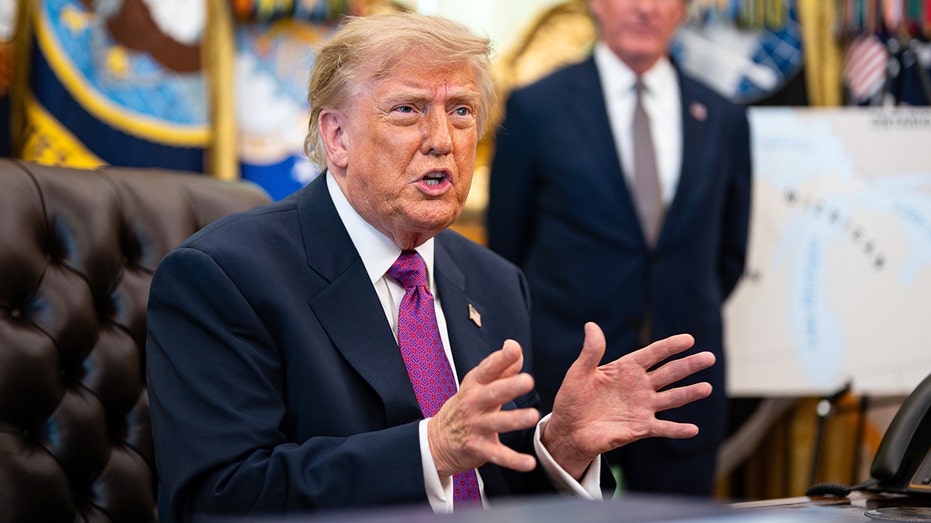
US President Donald Trump speaks to members of the media after signing an executive order in the Oval Office of the White House in Washington, DC, US, on Thursday, Aug. 27, 2026 (Al Drago/The Washington Post/Bloomberg via Getty Images / Getty Images)
Canada’s retaliatory tariffs took effect just after midnight Tuesday after trade negotiations between Washington and Ottawa collapsed late last month. The duties impose tariffs of 15%, 25% and 50% on hundreds of American products, including steel, aluminum, dairy products, appliances, clothing and farm equipment. The affected goods account for about 6% of the $333.6 billion in U.S. exports sent to Canada last year.
Before the tariffs took effect, Trump renewed his criticism of Canada on social media, urging Canadian companies to move operations to the United States and accusing the country of unfairly benefiting from access to the U.S. market. He has also threatened additional trade actions if the dispute continues.
Several Canadian provinces have already restricted or halted sales of U.S. alcoholic beverages as part of Canada’s response to previous U.S. trade actions. The Distilled Spirits Council has said U.S. spirits exports to Canada fell more than 70% year over year after those restrictions took effect.
The trade group’s president said the latest restrictions underscore the need for both governments to negotiate an end to the dispute.
CANADA PLANS TARIFF RETALIATION AFTER TRUMP WARNS ITS LEADERS TO ‘FALL IN LINE’
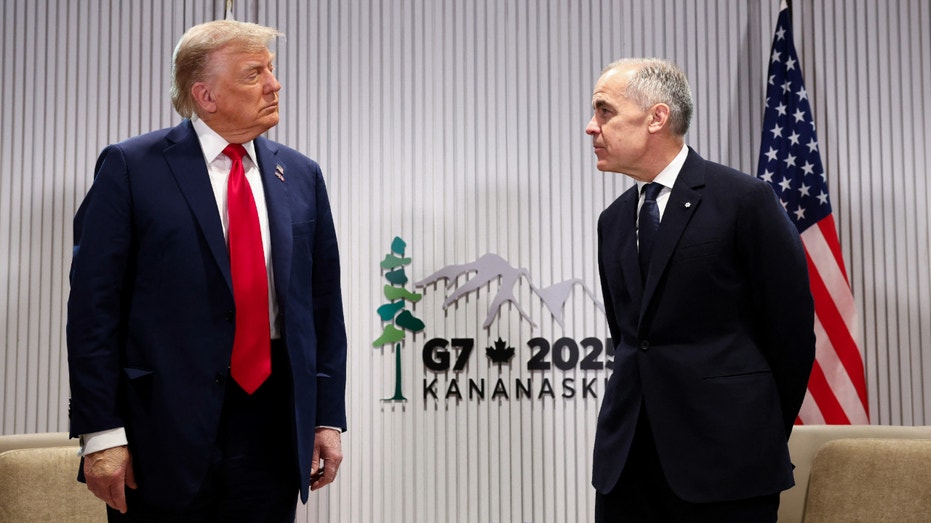
President Donald Trump meets with Canadian Prime Minister Mark Carney at the G7 summit in Kananaskis, Alberta, Canada, on June 16, 2025. (Reuters/Kevin Lamarque / Reuters)
“For more than a year and a half, American distillers have shouldered the brunt of this trade dispute,” Distilled Spirits Council President and CEO Chris Swonger said in a statement to FOX Business. “We urge leaders on both sides of the border to reach a negotiated solution that restores U.S. spirits to retail shelves throughout Canada and returns the spirits sector to a permanent zero-for-zero tariff framework.”
Earlier Tuesday, Canadian Prime Minister Mark Carney defended his government’s response, saying Canada would accelerate efforts to diversify its trading relationships and reduce its economic dependence on the United States.
“It’s about ensuring that no country can hold us hostage. And that we can live how we want to live,” Carney said, adding that Canada is expanding trade with countries outside the United States and exploring deeper economic ties with Europe.
The White House’s latest actions further strain the U.S.-Mexico-Canada Agreement, the North American trade pact negotiated during Trump’s first term. Canadian officials have argued that recent U.S. tariffs violate the agreement, while the Trump administration has said its actions are necessary to secure more favorable treatment for American businesses.
More than 70% of Canadian exports are shipped to the United States, underscoring the deep commercial ties between the neighboring countries despite the escalating dispute. Canada is also one of the largest export markets for U.S. goods, making the conflict significant for manufacturers, retailers and consumers on both sides of the border.
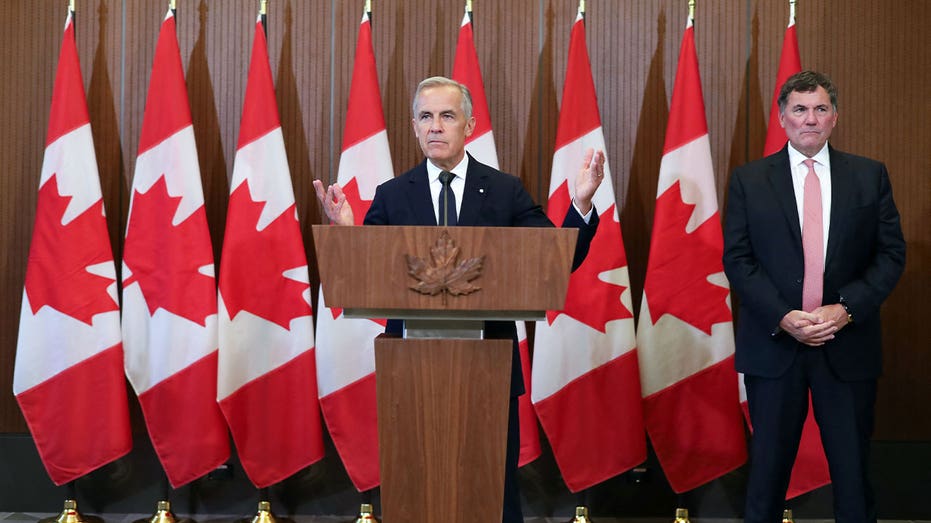
Canadian Prime Minister Mark Carney speaks during a news conference on U.S.-Canada trade negotiations. ( Dave Chan / AFP via Getty Images / Getty Images)
CLICK HERE TO GET FOX BUSINESS ON THE GO
Neither government has indicated when formal trade negotiations will resume, leaving uncertainty over whether the latest restrictions represent another negotiating tactic or a longer-term shift in North American trade relations.