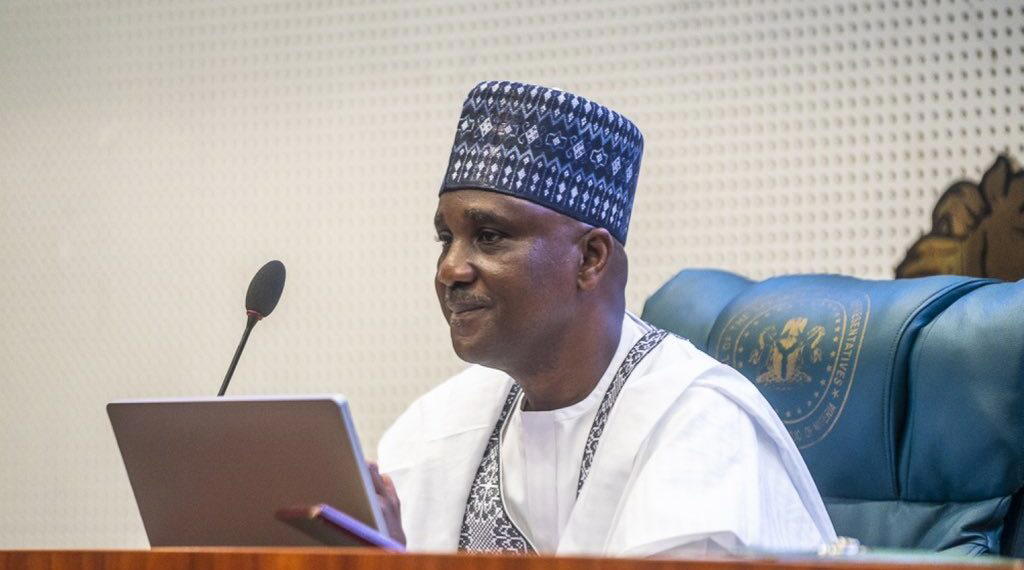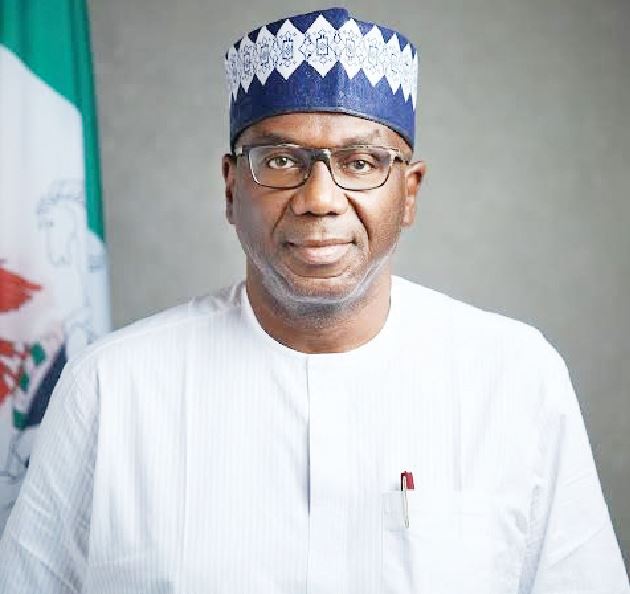
Since assuming office on May 29, 2023, President Bola Tinubu and Vice President Kashim Shettima have undertaken over 75 trips across 37 countries, collectively spending 344 days abroad, STEPHEN ANGBULU reports
A tally of all foreign engagements since assuming office shows that Tinubu logged approximately 261 days abroad, visiting at least 30 countries on 51 unique and recurrent trips. He also covered approximately 260,000 nautical miles and accumulated over 400 flight hours.
The figures were aggregated using all officially announced trips and available flight data.
Across all the destinations, the President spent the most time in France, with over 50 days in Paris during multiple official, working and private visits spanning 12 trips.
Meanwhile, Shettima has spent approximately 83 days abroad, visiting 17 countries on 24 unique and recurrent trips. He has covered over 50,000 nautical miles and accumulated approximately 110 flight hours.
While the Presidency argues that the extensive foreign engagements have helped restore investor confidence, strengthen diplomatic ties and attract investments, critics have questioned the frequency of the travels at a time Nigerians are grappling with economic hardship, rising inflation and worsening insecurity.
Tinubu’s global diplomacy footprint
On June 20, 2023, Tinubu opened his foreign schedule in Paris, the French capital, where he spent four days attending the Paris Summit for the New Global Financial Pact. On June 24, Tinubu departed Paris for London to meet privately with his predecessor, Muhammadu Buhari, and stayed for three days.
From July 8 to 10, the President was in Guinea-Bissau to attend the 63rd Ordinary Session of the Authority of Heads of State and Government of ECOWAS, emerging as Chairman of the regional bloc. In his capacity as ECOWAS Chairman, Tinubu was in Nairobi, Kenya, from July 15 to 17 for the fifth Mid-Year Coordination Meeting of the African Union and Regional Economic Communities.
The President began his ceremonial foreign engagements in the neighbouring Republic of Benin on August 1, 2023, to attend its 63rd independence anniversary. On September 5, he departed for India to attend the G-20 Leaders’ Summit held from September 10 to 11 at the request of Indian Prime Minister Narendra Modi.
From India, Tinubu made a technical stopover in Abu Dhabi, meeting UAE Leader, Sheikh Mohamed bin Zayed Al Nahyan. He later spent nine days in New York at the 78th United Nations General Assembly and afterwards spent five days in Paris before returning on September 29.
On November 9, he arrived in Saudi Arabia for the Saudi-Africa Summit in Riyadh. The President departed for Guinea-Bissau to mark its 50th independence anniversary on November 16. Two days later, he attended the G20 Compact with Africa Conference in Berlin. He returned on November 26 and, days later, departed for Dubai for the COP28 Climate Summit, returning December 5.
President Tinubu resumed travel on January 24, 2024, to Paris for a 14-day private visit, returning on February 6. On February 15, he proceeded to Addis Ababa for the 37th Ordinary Session of the African Union Heads of State Summit. He then visited Doha, Qatar, from February 29 to March 4 for an official visit.
On April 2, he was in Dakar to attend the inauguration of Senegal’s President, Bassirou Faye. From April 23 to 26, he was in the Netherlands for a state visit before proceeding to Riyadh for the Special World Economic Forum from April 26 to 28. He flew to London on April 29, spending nine days there before returning on May 8.
On May 23, he was in N’Djamena for the inauguration of President Idriss Deby Itno of Chad and visited Pretoria, South Africa, for President Cyril Ramaphosa’s inauguration from June 18 to 20.
The Nigerian leader spent three days, July 19 to 22, attending the Sixth Mid-Year AU Coordination Meeting in Accra, Ghana, and from August 14 to 17 was on an official visit to Malabo, Equatorial Guinea.
On August 18, Tinubu embarked on his maiden flight on the newly acquired Airbus A330 to Paris, returning after four days to swear in the Chief Justice of Nigeria, Justice Kudirat Kekere-Ekun.
Eleven days later, he departed for Beijing, where he met with Chinese President Xi Jinping and attended the Forum on China-Africa Cooperation before proceeding to London for seven days, returning on September 14.
On October 2, a day after Nigeria’s Independence Day anniversary, Tinubu departed for a two-week working leave split between the United Kingdom and Paris, returning October 19.
On November 17, he departed for Rio de Janeiro for the 19th G20 Leaders’ Summit.
From November 27 to December 1, he was in France for a state visit, the first by a Nigerian president in 24 years, signing agreements with President Emmanuel Macron. He then visited Cape Town to co-chair the 11th Bi-National Commission between Nigeria and South Africa with President Ramaphosa, returning December 5.
A busy 2025 and 2026 travel calendar
In 2025, Tinubu visited 11 countries.
On January 7, he visited Ghana for the inauguration of President John Mahama, proceeding to Abu Dhabi for the Sustainability Week Summit from January 12 to 16 and later to Tanzania for the Mission 300 Africa Energy Summit on January 27 and 28.
In February, he visited France on a private working visit before proceeding to Addis Ababa for the AU Summit.
In April, he embarked on an 18-day working visit to France and the United Kingdom from April 2 to April 21.
In May, he attended the inauguration Mass of Pope Leo XIV at the Vatican.
In late June, Tinubu made a state visit to Saint Lucia from June 28 to July 4, Nigeria’s first presidential visit to the Caribbean, and later attended the BRICS Summit in Brazil.
In August, he made a brief stop in Dubai before attending TICAD9 in Yokohama, Japan, and then proceeded on a state visit to Brasilia, Brazil.
In September, he undertook a 10-day working vacation between France and the United Kingdom from September 4 to 17, during which he held a private luncheon with Macron at the Élysée Palace.
The French capital remained Tinubu’s most visited foreign city and the destination where he spent the most time outside Nigeria since assuming office.
The President departed Lagos on December 28 for a year-end break in France, during which he met Rwandan President Paul Kagame.
The President opened his 2026 schedule with 22 days abroad in January alone, spending approximately 10 days in France as part of the year-end break.
He was in the United Arab Emirates from January 12 to 17 for the Abu Dhabi Sustainability Week and in Turkey from January 26 to 31 for a state visit.
In March 2026, Tinubu made a state visit to the United Kingdom, during which he oversaw the signing of a £746m deal to modernise the Apapa and Tin Can ports, with over 30 UK companies committing to investment partnerships.
He departed Abuja on May 3 for a three-nation tour to France for investor meetings with funds including Amundi, Citibank, BlueCrest and PGIM.
He travelled to Nairobi, Kenya, from May 11 to 13 for the Africa Forward Summit, co-chaired by Presidents Macron and William Ruto.
Tinubu visited Kigali, Rwanda, from May 13 to 16 for the Africa CEO Forum, where he held a bilateral meeting with President Kagame and announced that Nigeria would reciprocate Rwanda’s visa-free access for Nigerians.
His visits to Kenya and Rwanda brought the total number of countries visited by the President to 30 within three years.
Shettima’s expanding international role
Meanwhile, Vice President Shettima was in Rome from July 23 to 26, 2023, representing Tinubu at the first Stocktaking Moment Summit on Food Systems before proceeding to St. Petersburg, Russia, for the Russia-Africa Summit from July 26 to 29.
On August 21, 2023, he visited South Africa to represent Tinubu at the 15th BRICS Summit.
From September 11 to 18, Shettima visited Havana, Cuba, for the G77+China Leaders’ Summit.
The Vice President spent his longest stretch of 20 consecutive days outside the country from October 15 to November 3, 2023, attending the Third Belt and Road Initiative Forum in Beijing and the Norman E. Borlaug International Dialogue in Iowa, United States.
From January 14 to 18, 2024, he attended the World Economic Forum in Davos.
In February, he twice led delegations to Yamoussoukro, Côte d’Ivoire, for the Super Eagles’ AFCON semi-final and final matches.
He spent six days in New York in September 2024, where he delivered Nigeria’s national statement at the 79th United Nations General Assembly.
From October 17 to 19, he visited Stockholm, Sweden, for bilateral talks while Tinubu was on working leave in the United Kingdom and France.
In November 2024, Shettima led Nigeria’s 634-member delegation to COP29 in Baku, Azerbaijan.
In January 2025, he attended the World Economic Forum in Davos and later led Nigeria’s delegation to the 80th UN General Assembly in New York.
In January 2026, the Vice President attended the inauguration of Guinea-Conakry’s President Mamadi Doumbouya before proceeding to Davos for the 56th Annual Meeting of the World Economic Forum.
Days later, he represented Tinubu at the African Union Heads of State and Government Summit in Addis Ababa.
When both leaders were abroad
On at least four occasions, Tinubu and Shettima were simultaneously outside Nigeria.
Between late April and early May 2024, while Tinubu was in London, Shettima was in Kenya before attempting to proceed to Dallas, Texas.
In October 2024, the Vice President’s trip to Sweden overlapped with Tinubu’s working leave in the UK and France.
In January 2026, Shettima departed for Guinea-Conakry while Tinubu was still in Turkey.
The overlaps generated public debate over the simultaneous absence of Nigeria’s two highest-ranking elected officials, although government officials insisted that constitutional procedures were followed in each instance.
Cost of diplomacy
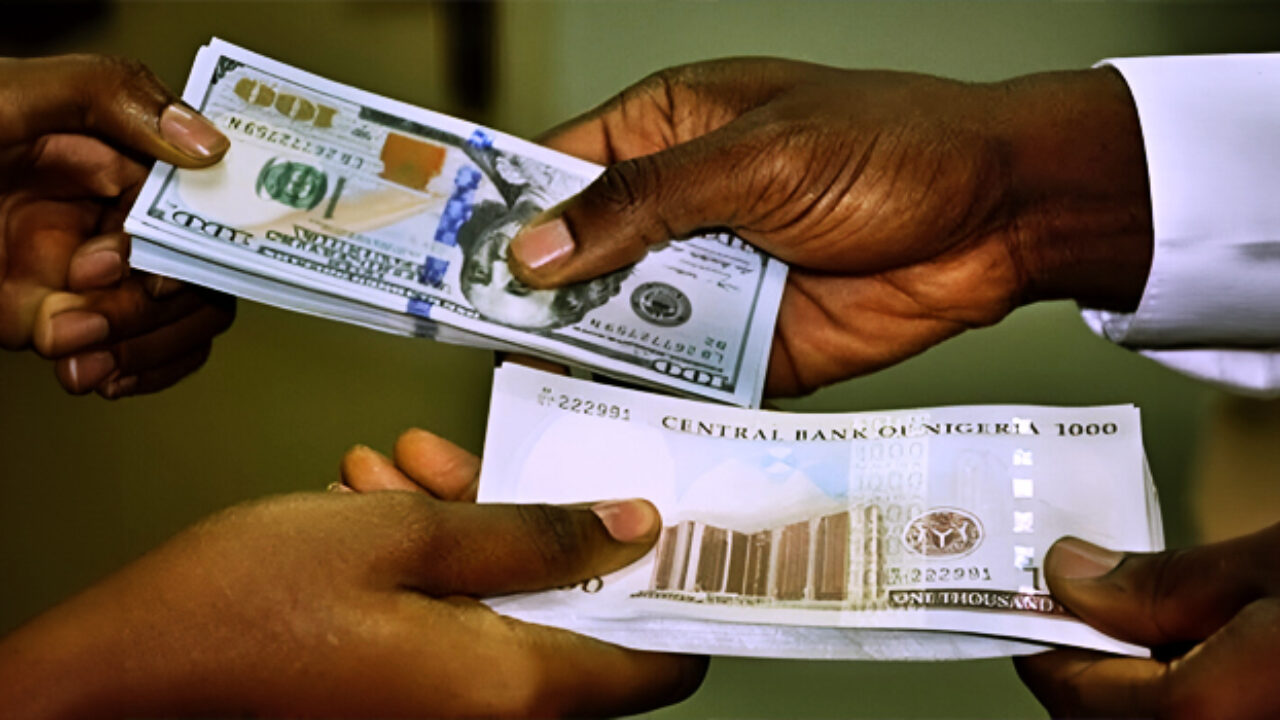
According to data from the Open Treasury Portal, the Presidency spent N36bn on international travel in 2024 alone.
The 2026 budget allocated N6.14bn and N1.31bn for the President’s and Vice President’s foreign trips respectively.
An earlier Sunday PUNCH report revealed that the Presidency had also spent at least N34.39bn on foreign exchange purchases for international travel and related obligations covering 2024 and 2025.
The figures have fuelled debates over government spending at a time many Nigerians continue to struggle with inflation, high transportation costs and declining purchasing power.
Critics raise concerns
The administration’s extensive travel schedule has continued to attract criticism from opposition politicians and governance advocates who argue that while international engagements are important, they should not overshadow urgent domestic challenges confronting Nigerians.
Former Labour Party presidential candidate, Peter Obi, has been one of the most vocal critics of the President’s foreign trips.
In January 2026, Obi questioned the timing and frequency of Tinubu’s travels, noting that the President spent 23 out of 31 days outside the country while insecurity, inflation and economic hardship persisted at home.
According to Obi, leadership requires a visible presence during periods of national difficulty.
“A president must market his country internationally, but he must also be present to provide direction and reassurance to citizens. The greatest investment any government can attract is confidence from its own people,” he stated.
However, a political analyst, Dr. Kabiru Adamu, said foreign diplomacy is a necessary component of modern governance but should not become a substitute for direct engagement with domestic problems.
“No serious country can isolate itself from the international community. Investment attraction, diplomacy and trade negotiations require presidential engagement. However, citizens will naturally ask whether these trips are producing measurable outcomes that affect their daily lives,” he said.
According to him, the challenge for the administration is not necessarily the number of trips undertaken but the ability to demonstrate clear benefits arising from them.
“When government officials say billions of dollars have been attracted into the economy, Nigerians want to know where those investments are, how many jobs they have created and whether they have improved living conditions. Those are the questions people are asking,” Adamu noted.
Similarly, a development economist, Prof. Muda Yusuf, said the effectiveness of international engagements should be assessed through outcomes rather than frequency.
“The issue should not be whether the President travels or not. Every leader travels. The real issue is the return on those engagements. Have they translated into higher investments, stronger exports, improved infrastructure financing and economic opportunities for Nigerians? That is what ultimately matters,” he said.
Trips have restored investors’ confidence in Nigeria — Presidency
Defending the volume and frequency of the engagements, Senior Special Assistant to the President on Media and Publicity, Temitope Ajayi, argued that the President’s trips had produced tangible and measurable results.
He told Sunday PUNCH, “These trips have benefited the country. They have restored confidence in the country. Global investors are now looking at Nigeria differently. Both direct and portfolio investments are pouring into the country.
“See the performance of our stock exchange, one of the best-performing five in the world. That is one of the benefits of the trips.
“The international oil companies have staked over $40bn in our oil economy in the past three years. They were divesting before because Nigeria was not attractive to them. But on the back of his reforms and fiscal incentives for the oil sector, the IOCs are coming back with major investments in deep offshore and gas assets.”
The presidential aide further argued that the jobs of the President and his deputy involve advancing Nigeria’s interests beyond its borders.
“The job of the President is not confined to Abuja. Everywhere he and the Vice President go, and have gone, they are doing the work of the country.
“Don’t forget that the President is the chief diplomat of the country. He is the chief marketing officer of the country.
“That is statecraft. It is about domestic and international affairs as they affect your country, sub-region and continent. Everywhere he goes, he meets CEOs of top companies in key sectors of the economy. So, we should not reduce his trips to the number of days. They are largely official visits, doing the work of Nigeria,” he stated.