Fewer, pricier flights. Freight surcharges. Manufacturers hoarding inventory. Even bankruptcy.
For American companies large and small, the combination of tariffs imposed under President Donald Trump‘s trade policies, surging fuel prices from the Iran war and, now, rising interest rates is forcing executives to make tough choices.
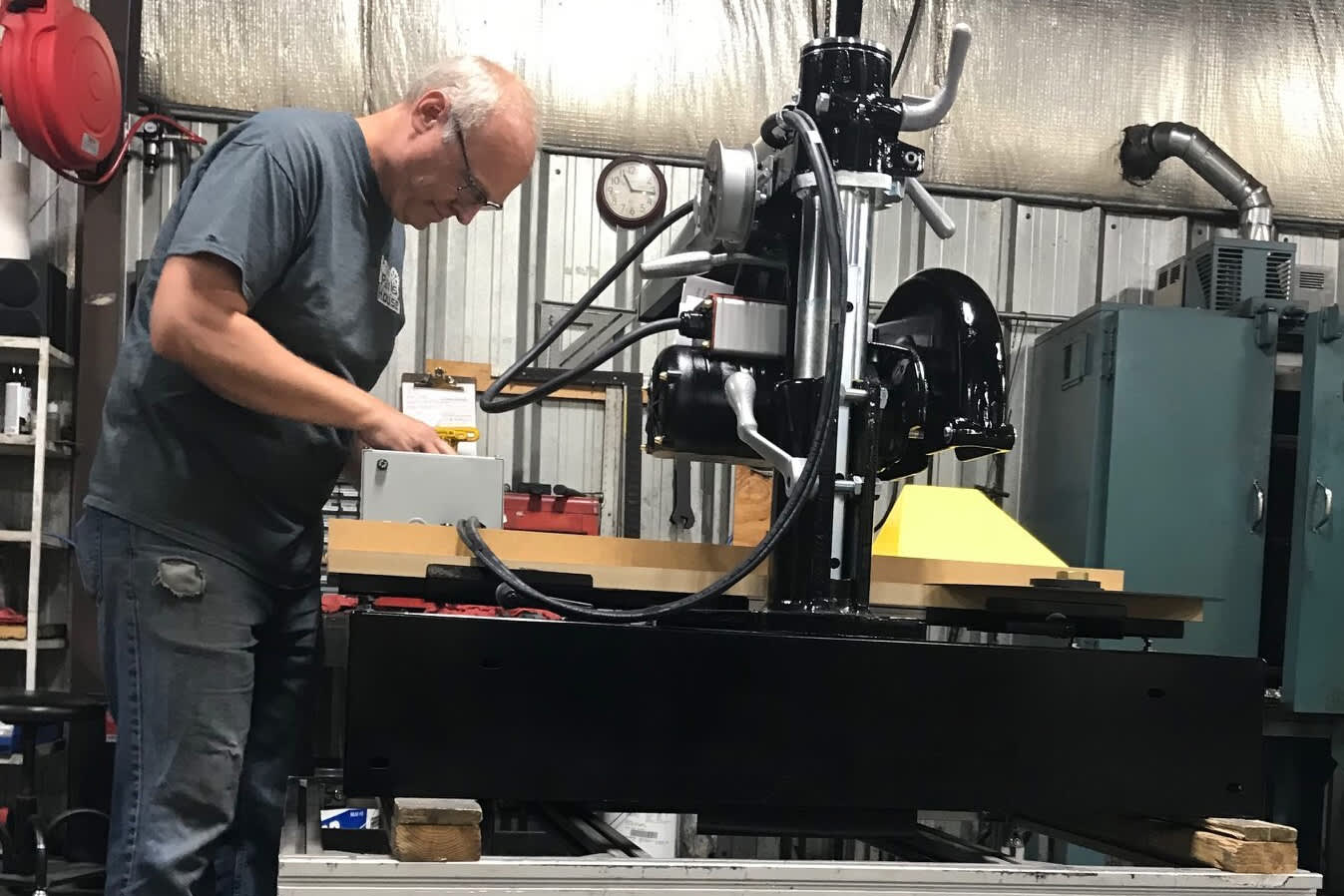
Allen Eden has been holding onto extra inventory for his 25-person business, the Original Saw Co. in Britt, Iowa, which makes industrial power saws for wood and metalwork, as he grapples with spiking prices for aluminum, steel and essential parts.
One example: A “little bracket” used for his saw motors more than doubled in price this summer, surging to $87 from $42, he said.
“It’s awful,” Eden, 56, told CNBC. “[I’m] just trying to keep more of the stuff around because I don’t know if we can get it down the road.”
It’s a three-way squeeze for businesses across manufacturing, transportation and retail: Tariffs are making raw materials and goods more expensive. Higher fuel prices are pushing up the cost of making and moving them. And rising rates are making it more expensive to finance the inventory and equipment businesses need to keep running.
While few sectors are completely insulated from these pressures, middle-market manufacturers are caught in a particularly tight vise. Rising steel and fuel costs are forcing them to pass at least some of those expenses on through higher prices, helping feed the stubborn inflation of the past few years.
But to wrangle inflation, the Federal Reserve raised interest rates for the first time in three years and signaled another hike is possible this year. That makes it more expensive for businesses to finance inventory and borrow for growth at the same time that higher input costs and record prices for diesel, which is used for trucking, squeeze margins.
Price increases for Eden’s saws, sold both to megaretailers like Home Depot and directly to small- and medium-sized manufacturers, look inevitable, the business owner said.
The pain isn’t being evenly distributed. Smaller companies typically rely on shorter-term lending, meaning Fed hikes pass more directly into their costs, JPMorgan Chase global strategy head Dubravko Lakos-Bujas said in a Sept. 14 note.
But regardless of size, capital-intensive sectors like manufacturing and equipment suppliers, logistics firms including trucking fleets, and commercial real estate also suffer more in a rising-rate environment, according to Lakos-Bujas.
“The combination of higher rates and higher fuel prices means that sectors with heavy exposure to both are first in the line of fire,” said Gregory Daco, chief economist at EY-Parthenon, the global consulting arm of Ernst & Young.
“Any type of manufacturing is going to be disproportionately exposed to higher fuel prices,” he said.
Rising fuel and commodity costs have strained both material makers and the retailers they serve.
Mark Costa, CEO of industrial giant Eastman Chemical, said in May that the one-two punch of interest rates and inflation was forcing his industry into a corner. Eastman makes the plastics, additives, and other materials used in products as diverse as medical devices, animal feed, and car windshields.
“Everyone had their back against the wall and had no room to absorb these increases,” Costa said. “Everyone is very quickly raising prices faster than I’ve ever seen in 20 years.”
On the retail side, unexpected pressure from energy and raw materials costs will “fully offset” the benefit of $730 million in tariff refunds, Home Depot CFO Richard McPhail said last month.
“There’s just so much uncertainty right now. … You think inflation, interest rates, fuel prices,” McPhail said last week at a conference.
Supply chain holes
Among those hardest hit are manufacturers in the domestic automobile supply chain.
Lucerne International, a privately held auto parts maker based in suburban Detroit, stopped manufacturing operations in the U.S. and canceled plans last year for a $50 million aluminum forging plant in Michigan.
“The onset of the Trump tariffs 2.0 has just really torn holes in our global supply chains and increased costs significantly,” Lucerne CEO Mary Buchzeiger said, citing higher costs for raw materials, including aluminum, as well as finished parts.
Buchzeiger, whose firm still manufactures overseas, said she has shifted U.S. operations to warehousing, distribution, and tariff-mitigation solutions for other companies, which offer “much better margins.”
“There’s no doubt that there’s margin pressure for suppliers,” Paul McCarthy, CEO of vehicle supplier trade association MEMA, said. “Some of it, we try to absorb … and then some of it does have to be passed on.”
Growth, as measured by earnings before interest and taxes for the top 100 auto suppliers, fell last year to 4.2%, down from more than 6% in 2021, according to consulting firm Berylls by AlixPartners. Among the top 10 automakers, that figure is 5.2%, down from nearly 8% in 2022.
Not all auto companies have managed the additional costs. Spanish auto parts maker Grupo Antolin, which supplies components to automakers including Ford, GM, Volkswagen and Stellantis, filed for Chapter 15 bankruptcy protection in the U.S. in July. The company cited tariffs, higher raw-material and energy costs, and supply-chain disruptions as reasons for its restructuring.
Divide in corporate America
Better off are the giants of the corporate world, like the tech and finance companies that fill the S&P 500. These firms typically have more cash reserves and take out long-term debt, insulating them somewhat from the sting of higher rates.
Most larger companies can thrive until borrowing costs rise much further. The pain would hit when the yield on the 10-year Treasury bond reaches 6%, up from around 5% now, according to JPMorgan’s Lakos-Bujas, who cited 80 years of data.
Borrowing costs are expected to stay higher for longer. Persistent inflation, which forced Warsh to raise the benchmark Fed rate against Trump’s wishes, along with heavy borrowing from the U.S. government, is keeping upward pressure on rates.
Across corporate America, companies are grappling with these shocks in different ways. The divide comes down to one question: Who has pricing power?
Some industries have learned they can readily pass higher costs on to consumers, while others are caught in a catch-22: If they raise prices too much, they risk destroying demand.
Airline executives last week boasted of higher fares as customers keep booking trips, especially abroad, allowing them to pass increased fuel costs on to travelers. Airlines scaled back growth plans, cutting less profitable flights even after the collapse of Spirit Airlines this year.
Fewer flights can mean pricier airline tickets, and fares were up more than 23% in August from last year, according to the latest inflation read. Yet even strong demand has its limits.
“The consumer has been incredibly, incredibly resilient,” United Chief Financial Officer Mike Leskinen said Wednesday during a Morgan Stanley conference in Laguna Beach, California.
“But there’s some marginal routes that don’t make sense in a higher fuel environment. So we cut them,” Leskinen said. “You should see us continue to … behave that way.”
Much of corporate America remains resilient despite higher fuel and financing costs. Profit margins for major companies hover near historic highs, propelled by strong productivity gains, labor costs that have stayed in check and surging artificial intelligence investment that is driving growth.
But a risk of Warsh’s efforts is that higher rates don’t directly address the root causes of inflation: the Iran war, the Trump administration’s tariffs, and the AI boom, which has driven up the prices for everything required to build and run data centers, from electricity to memory chips, copper, and land.
Raising rates to tap the brakes on the U.S. economy could slow it down too much, or send stocks into a tailspin, said EY-Parthenon’s Daco.
“The economy is resilient, but it’s exposed to growing pockets of risk,” he said. “A shock could materialize faster than we all think.”