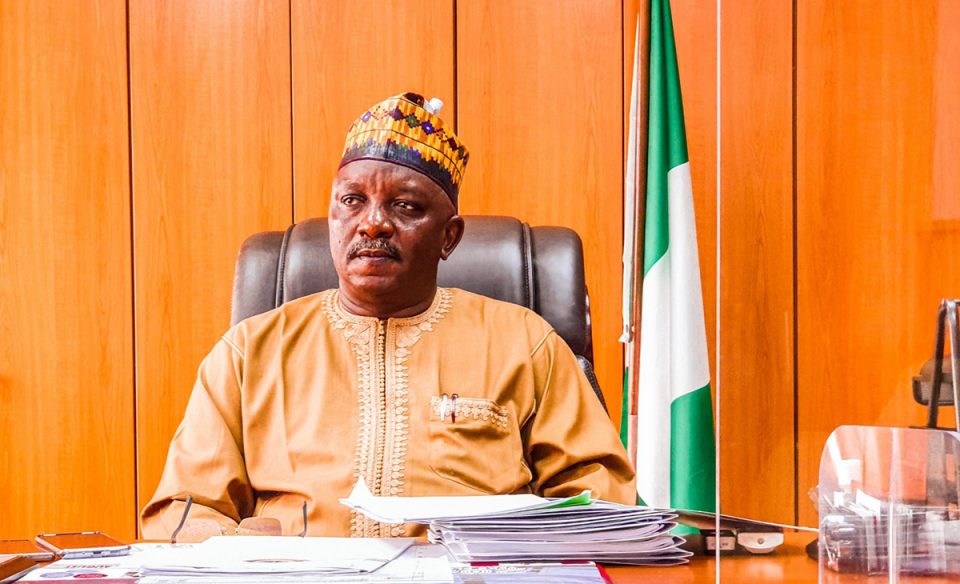
The conviction and 75-year prison sentence handed to former Minister of Power, Saleh Mamman, has become one of the country’s most dramatic anti-corruption cases in recent years. NATHANIEL SHAIBU examines the twists, legal battles and implications of a case that has reignited public outrage over corruption in the country’s troubled power sector
On May 13, 2026, the conviction and 75-year prison sentence handed to former Minister of Power, Saleh Mamman, marked the climax of nearly two years of investigations, courtroom battles, procedural delays and dramatic twists.
The legal battle transformed the former cabinet member from a serving minister into a fugitive facing one of the stiffest corruption punishments imposed on a public official in recent years.
From his arrest by operatives of the Economic and Financial Crimes Commission in 2024 to his conviction by the Federal High Court in Abuja two years later, Mamman’s legal journey exposed how billions of naira earmarked for critical power projects were allegedly diverted through proxies, private companies and bureau de change.
The case also reopened public anger over the chronic failure of Nigeria’s power sector, a sector that has consumed enormous public funds for decades while millions of Nigerians continue to grapple with unstable electricity supply.
Mamman, who served as Minister of Power under late President Muhammadu Buhari between 2019 and 2021, first came under EFCC scrutiny following intelligence reports and financial tracing linked to the Mambilla Hydroelectric Power Project and the Zungeru Hydroelectric Power Project.
Investigators alleged that huge sums released for the projects were illegally moved from government accounts into private hands.
The former minister was eventually arrested and questioned by the anti-graft agency before being formally arraigned at the Federal High Court in Abuja on July 11, 2024.
At the arraignment, the EFCC slammed him with a 12-count charge bordering on conspiracy to commit money laundering and unlawful diversion of public funds amounting to about N33.8bn.
The charges immediately drew national attention because of the scale of the alleged fraud and the strategic importance of the projects tied to the case.
In Count One, the EFCC alleged that the former Minister, “conspired with other officials of your Ministry and some private companies to indirectly convert the total sum of =N=33,804,830,503.73 {Thirty-Three Billion, Eight Hundred and Four Million, Eight Hundred and Thirty Thousand, Five Hundred and Three Naira, and Seventy-Three Kobo) through various private companies… in relation to the funds released for the Mambilla and Zungeru Hydroelectric Power Plant Projects by the Federal Government of Nigeria… contrary to Sections 18(a), 15(2)(b) of the Money Laundering (Prohibition) Act, 2011 {as Amended), and punishable under Section 15(3) of the same Act.
In another count, Mamman was alleged to have directly taken possession “of the sum of N18bn from the Federal Ministry of Power account domiciled with the Central Bank of Nigeria through various private companies and bureau de change operators.”
The EFCC also alleged that several transactions were structured to disguise the movement of public funds through intermediaries and corporate fronts.
According to court documents, part of the money was allegedly channelled into the acquisition of luxury properties and foreign exchange transactions.
When the charges were read, Mamman pleaded “not guilty”.
His legal team immediately challenged the allegations and insisted that the prosecution was attempting to criminalise official government transactions carried out during his tenure as minister.
But the EFCC pressed ahead.
Over the following months, prosecutors called multiple witnesses, including bank officials, financial investigators, ministry staff and bureau de change operators.
The witnesses tendered bank statements, internal memos, transaction records and financial intelligence reports which the prosecution argued established a clear money trail linking the former minister to the diversion of billions of naira.
One prosecution witness reportedly told the court that large cash movements and foreign exchange transactions connected to the case “did not follow normal government financial procedures.”
Another witness explained how funds allegedly moved from ministry accounts were converted into dollars through bureau de change before being redistributed to associates and proxy companies.
The prosecution repeatedly argued that the transactions bore the hallmarks of money laundering.
According to the EFCC, the diverted funds were part of allocations intended for critical infrastructure projects aimed at improving electricity generation and transmission across Nigeria.
The Mambilla Hydroelectric Power Project, which featured prominently in the charges, has for years been presented as one of Nigeria’s flagship power initiatives.
Successive administrations promoted the project as a major solution to the country’s electricity crisis, yet it remained trapped in controversies involving funding disputes, delayed execution and allegations of corruption.
Proceedings in the trial of the former minister suffered repeated adjournments arising from procedural applications, filing disputes and health-related interruptions.
At one point during the trial, Mamman reportedly slumped inside the courtroom, forcing an abrupt suspension of proceedings.
The incident generated widespread public reactions, with some observers questioning whether his deteriorating health could slow down or complicate the trial.
His lawyers also mounted sustained legal resistance against the prosecution’s evidence.
The defence challenged the admissibility of several financial documents tendered by the EFCC and argued that investigators failed to establish direct criminal intent.
Counsel for the former minister, Femi Atteh, SAN, maintained that many of the financial transactions cited by the prosecution were administrative disbursements carried out within the framework of government operations.
The defence further argued that Mamman did not personally benefit from the alleged transactions and urged the court to dismiss the charges.
But prosecutors insisted the evidence before the court revealed a deliberate and systematic diversion of public funds.
As the case approached conclusion in this year, another delay emerged over the filing of final written addresses.
The defence reportedly failed to file its address within the stipulated timeframe, prompting another adjournment before judgment date was eventually fixed.
Then came the ruling that altered the course of the case; on May 7, 2026, Justice James Omotosho convicted Mamman on all 12 counts.
Delivering judgment, the court held that the EFCC had successfully established beyond reasonable doubt that the former minister engaged in unlawful diversion and laundering of public funds.
Justice Omotosho reportedly held that the evidence presented before the court showed “a deliberate movement of public funds through private entities and intermediaries designed to conceal the origin of the money.”
The court rejected the explanations offered by the defence regarding the transactions.
According to reports of the proceedings, the judge stated that the prosecution’s evidence was “direct, credible and substantially unchallenged.”
The conviction instantly triggered fresh public debate around corruption within Nigeria’s public sector and renewed criticism of the management of the power ministry during previous administrations.
But the case took an even more dramatic turn shortly after the conviction, as Mamman failed to appear before the court for sentencing proceedings.
His absence shocked observers and prompted immediate action from the court.
Justice Omotosho subsequently issued a bench warrant ordering security agencies to arrest the former minister wherever he was found.
The development fuelled speculation that he might have gone into hiding after sensing the likely outcome of the case.
The warrant also intensified public interest in the trial, with many Nigerians closely monitoring developments ahead of sentencing.
On May 13, 2026, the Federal High Court proceeded to sentence him in absentia.
Justice Omotosho imposed separate prison terms across the 12 counts and ordered that the sentences run consecutively rather than concurrently.
The cumulative effect was a 75-year prison sentence.
The court also ordered the forfeiture of two units of four-bedroom detached apartments located at 93 Ahmed Joda Crescent, Kado Estate, Abuja, and a property located at No. 12A & B, Lingo Street, Wuse, Abuja, to the Federal Government.
The judge also ordered the forfeiture of $13,890, €19,960, £10,000 , 42,390 Doran, R35,000, ₹50,600 (Indian Rupee) and 247 Saudi Arabia Riyal to the government.
Justice Omotosho further directed law enforcement agencies to ensure the sentence was enforced once the former minister was apprehended.
The sentencing immediately dominated public discourse because of its severity.
While Nigerian courts frequently impose lengthy sentences across multiple counts in corruption cases, such terms are often ordered to run concurrently, reducing the effective prison period.
In Mamman’s case, however, the court chose consecutive sentencing, dramatically increasing the punishment.
The judgment was widely interpreted as one of the toughest anti-corruption sentences imposed on a former federal cabinet member in Nigeria.
Anti-corruption campaigners hailed the judgment as a signal that politically exposed persons could still be held accountable under the law.
Others, however, questioned whether the conviction represented selective enforcement in a country where numerous corruption allegations against public officials rarely end in convictions.
Beyond the courtroom drama, the case revived broader scrutiny of Nigeria’s troubled electricity sector.
For many Nigerians, the Mamman trial became symbolic of deeper systemic failures within public administration and infrastructure management.
At 67 years old, the former minister would theoretically be over 140 years old if the cumulative 75-year sentence were served literally in full, a reality that has further amplified public conversation around the symbolic weight of the punishment.
As of Friday, the former minister has remained out of public sight, while security agencies continue efforts to locate and arrest him in compliance with the court order.