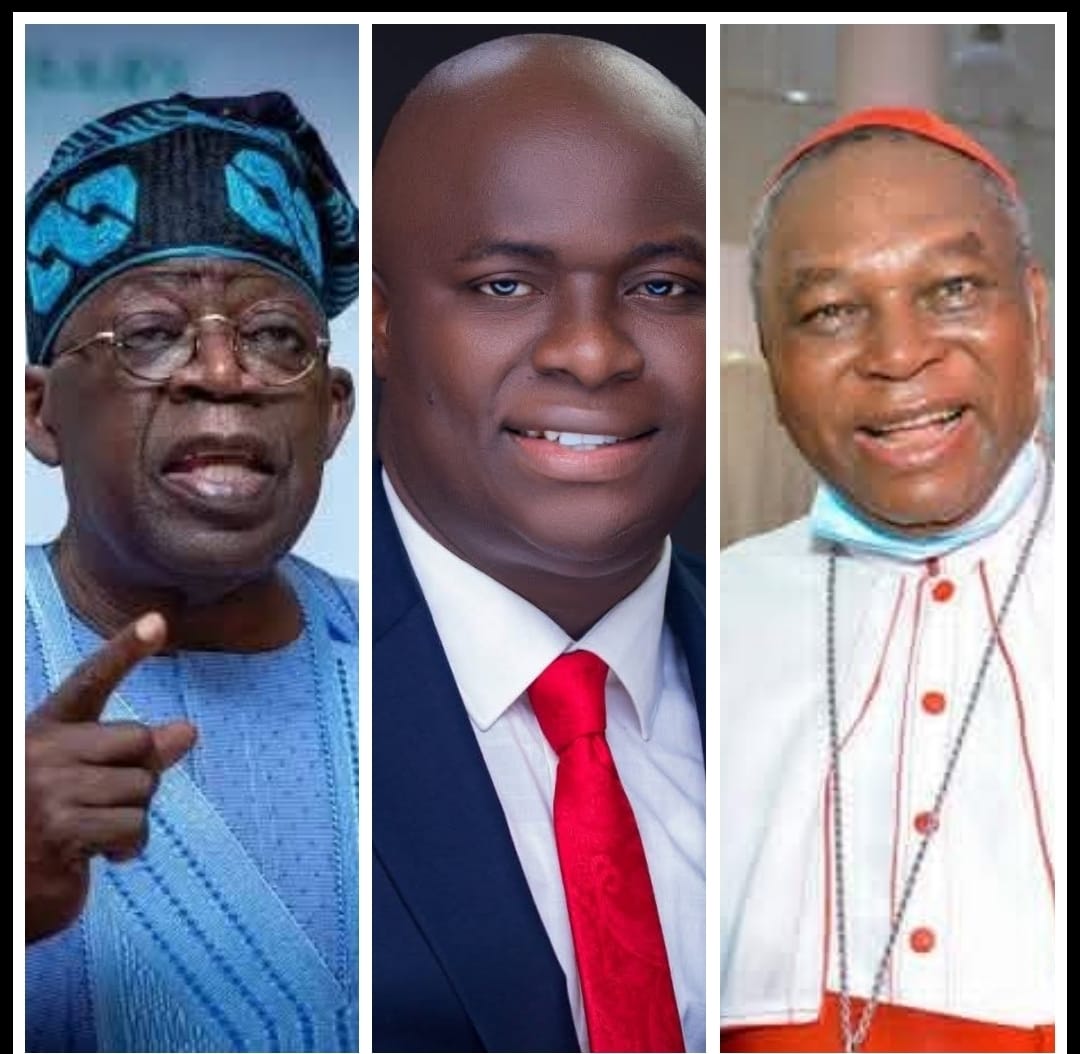
The recent meeting between President Bola Ahmed Tinubu and the Catholic Bishops’ Conference of Nigeria has generated significant public debate. Much of the discussion has centred on the remarks of His Eminence, John Cardinal Onaiyekan, who disclosed that the bishops raised concerns about insecurity, hunger, and the economic hardship facing millions of Nigerians, and that the President did not entirely agree with their assessment.
To many observers, this appeared to present a stark choice: either the bishops were right, or the President was. I believe the reality is more nuanced.
In many respects, both Cardinal Onaiyekan and President Tinubu are right, each speaking from a different vantage point. The Cardinal speaks as a shepherd. Every day, he encounters ordinary Nigerians who struggle to feed their families, pay school fees, meet medical expenses, and cope with rising living costs. He hears the cries of parishioners whose purchasing power has declined and who naturally compare today’s prices with those of a few years ago. From that perspective, concerns about hardship and insecurity are both genuine and understandable.
No compassionate religious leader would ignore such realities.
At the same time, President Tinubu inherited an economy facing deep structural challenges. His administration has consistently argued that the country was burdened by costly subsidy regimes, severe foreign exchange distortions, high debt-servicing obligations, and fiscal pressures that limited the government’s ability to invest in development. From that perspective, difficult reforms were presented as necessary steps toward long-term economic stability.
Whether one agrees with every policy or not, it is also true that many economists have argued that some of these structural problems required reform. Supporters of the administration point to macroeconomic indicators they believe show progress and cite statements from economic commentators, including former Central Bank Governor, now Emir of Kano, His Royal Highness Mohammed Sanusi (III) who has acknowledged improvements in some economic metrics while also recognizing that many Nigerians continue to face hardship.
The challenge is that macroeconomic improvements and household realities do not always move at the same pace. A mother buying food in the market experiences the economy differently from an economist studying fiscal balances or GDP growth. Both perspectives can describe real aspects of the same country. The security conversation deserves similar balance.
Nigeria’s security challenges did not begin in 2023. Years before the current administration, communities across different parts of the country experienced terrorism, banditry, kidnapping and attacks on transportation infrastructure. Many Nigerians still remember incidents such as the attack on the Abuja- Kaduna train and the assault on the Kuje Correctional Centre, weekly bombings of Churches and Mosques before President Tinubu assumed office.
That historical context does not erase present security concerns, but it does remind us that today’s challenges developed over many years.
As with many national issues, reasonable people may differ on whether security has improved sufficiently, deteriorated in certain areas, or remains uneven across regions.
In a democracy, religious leaders have every right to voice the concerns of the people they serve. Likewise, an elected President has the responsibility to explain and defend the policies his administration believes are necessary for the country’s future. These roles need not be viewed as being in conflict.
Nigeria benefits when faith leaders speak truthfully about the suffering they witness and when government leaders remain willing to engage those concerns respectfully.
Ultimately, our national conversation should not become a contest over who “won” the meeting between the bishops and the President.
The greater task is ensuring that economic reforms translate into visible improvements in the daily lives of Nigerians while sustaining efforts to improve security and national stability.
As citizens, we should continue to pray for Nigeria, encourage constructive dialogue, and support every sincere effort aimed at building a more secure, prosperous, and united nation.
As Nigerians, we commend our father, His Eminence John Cardinal Onaiyekan, for courageously giving voice to the concerns of some Nigerian citizens. The Church has always served as the conscience of society, and it is both proper and necessary that respected religious leaders speak on behalf of the hungry, the poor, and the vulnerable.
At the same time, we also commend President Bola Ahmed Tinubu for standing firmly behind his policies and explaining the rationale behind the difficult reforms his administration has undertaken. Leadership demands not only empathy but also conviction, especially when implementing policies believed to be in the nation’s long-term interest.
We expect that the administration will continue to intensify efforts to improve security. The successful rescue of abducted schoolchildren and the numerous military operations that have restored peace in several communities demonstrate what is possible when the nation’s security agencies act decisively. We encourage the President to build on these successes until every Nigerian can live, travel, farm, and do business without fear.
While we pray that God hears the heartfelt concerns expressed by our father, His Eminence Cardinal Onaiyekan, regarding insecurity, hunger, and the suffering of “his parishioners”, we also respectfully hope that the nation acknowledges the significant infrastructure projects currently going on across Nigeria. Projects such as the Lagos-Calabar Coastal Highway, the Sokoto-Badagry Super Highway, the Calabar-Abuja Super Highway, the Akwanga-Jos-Bauchi-Gombe Highway, the Gombe-Biu Highway, the Akure-Benin Highway, Owerri-Okigwe Road, Ndi-Egbe Bridge linking Ebonyi and Cross River, Calabar-Ebonyi-Benue-‘Kogi-Abuja Trans-Saharan Superhighway, the Abuja-Lokoja-Okene-Auchi-Benin Highway, the Makurd-Otukpo-Otukpa-Enugu Highway, the Bodo-Bonny Bridge in Rivers State, the Buruku Bridge in Benue State, the hurricane Wike transformations in Abuja, numerous other federal road and bridge projects represent long-term investments in Nigeria’s future.
These projects may not immediately reduce the price of food or restore purchasing power, but they are laying the physical and economic foundations upon which future prosperity can be built.
No nation recovers from decades of structural challenges overnight. The accumulated effects of years of infrastructure deficits, economic distortions, insecurity, and institutional weaknesses cannot be reversed within a few years. The journey is difficult, and Nigerians are justified in demanding results.
Equally, reforms that seek to address deep-rooted problems require patience, consistency, and sustained implementation before their full benefits become visible.
That is why this moment should not divide Nigerians into opposing camps. Rather, it should inspire all of us to pray, to support constructive criticism, to encourage good governance, and to insist on greater performance where improvement is still needed.
Our prayer is simple: may God grant President Bola Ahmed Tinubu the wisdom, strength, and courage to complete the task of rebuilding Nigeria. May He continue to guide our father, His Eminence John Cardinal Onaiyekan, and all our religious leaders as they speak for justice, compassion, peace, and national unity.
There is another perspective that deserves consideration. While many Nigerians continue to experience the effects of inflation and reduced purchasing power, several respected economists, international financial institutions, and global rating agencies have noted improvements in key macroeconomic indicators. These include stronger GDP growth, higher foreign exchange reserves, increased foreign capital inflows, a more stable balance of payments, improving government revenue, a narrowing fiscal deficit, and greater confidence in Nigeria’s long-term economic direction. Oil production has also recovered, rising to nearly two million barrels per day, strengthening the country’s revenue outlook.
These are not statistics that immediately put more food on a family’s table, and that is precisely why many Nigerians still feel the weight of the reforms. Macroeconomic recovery does not always translate instantly into household prosperity. There is often a lag between improvements in national economic indicators and improvements in the daily lives of ordinary citizens.
Our hope, therefore, is that the gains now being celebrated at the macroeconomic level will, in the not-too-distant future, be felt in the homes of ordinary Nigerians. We pray that the positive indicators will translate into lower inflation, greater employment opportunities, improved purchasing power, and a better quality of life for the parishioners of His Eminence Cardinal John Onaiyekan and indeed for every Nigerian.
Ultimately, the true measure of any economic reform is not only the strength of the nation’s balance sheet but also the welfare of its people. If the current reforms continue to produce stronger growth, increased investment, improved fiscal stability, and sustained expansion in productive sectors, then the greatest victory will be when every Nigerian family begins to experience those gains directly. That is the destination we all desire-a Nigeria where sound economic management is reflected not only in national statistics but also in fuller markets, thriving businesses, secure communities, and renewed hope in every home.
History will judge not only the intentions of today’s leaders but also the results their decisions produce. Until then, both compassion for those who suffer and commitment to long-term national renewal must remain part of Nigeria’s conversation. I deeply appreciate His Eminence John Cardinal Onaiyekan for always standing by Nigeria, and I commend Africa’s Reformative President of Nigeria, Bola Ahmed Tinubu GCFR, for the courage to perform this painful surgery of getting Nigeria out of the intensive care unit of 40 years of mismanagement and economic recklessness. Both Men are great Nigerians, and we are forever grateful for their contributions to Nation-building.
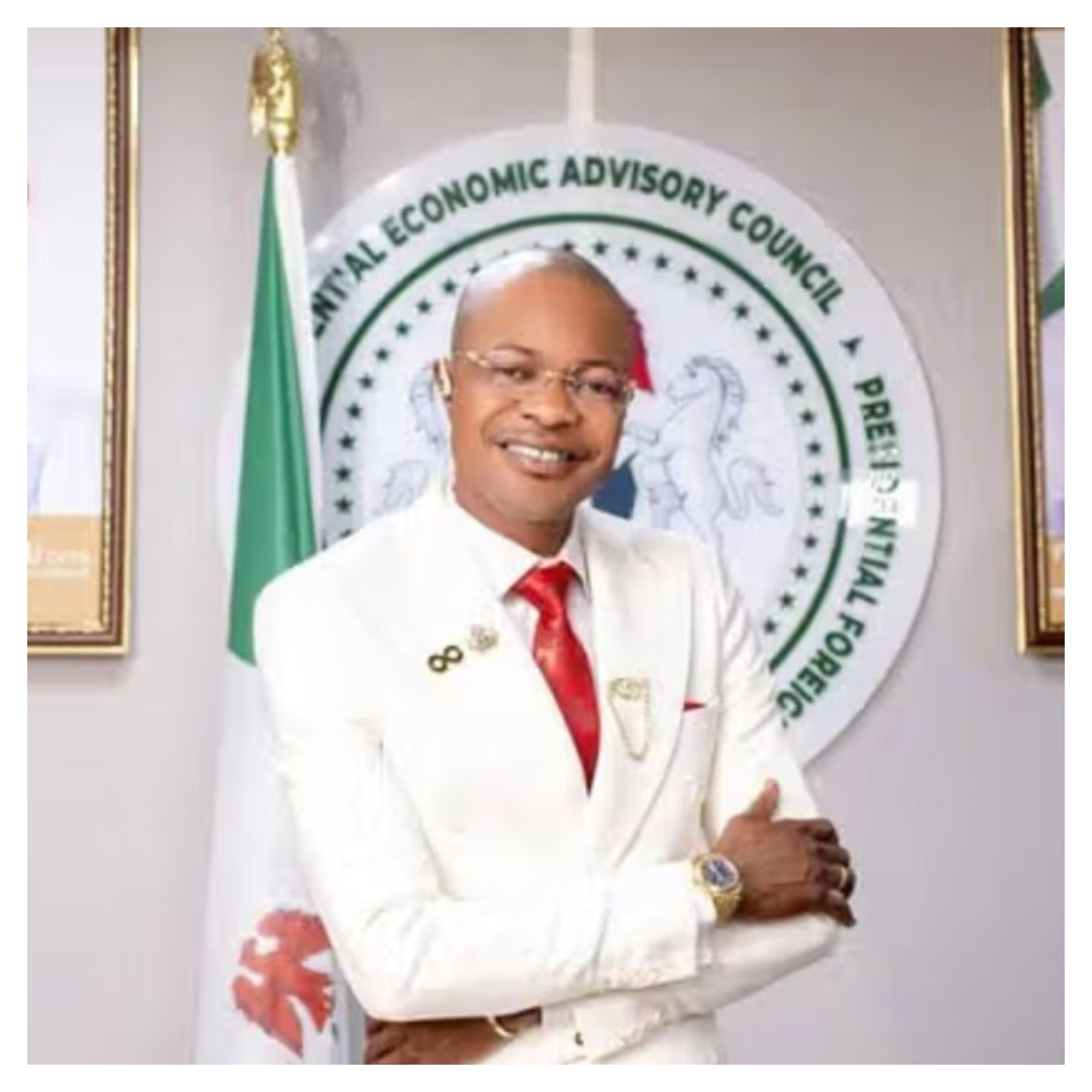
… Enenche Enenche,
Special Assistant (Media) To the Director-General, Relax, Tinubu Is Fixing Nigeria (RTIFN)