The Australian government is reportedly seeking to replace capital gains tax discounts on crypto and other assets with an inflation indexation tax, which could increase the taxes on long-term crypto gains.
The Albanese government’s fiscal year 2027 budget, set to be released on Tuesday, would cut the current 50% capital gains tax discount alongside changes to housing investment taxes, the Australian Financial Review reported on Sunday, citing people familiar with the budget.
Australian investors can currently claim a 50% capital gains tax discount on assets held for more than 12 months. The proposed indexation model would instead tax full real gains, adjusted for inflation, over the time the asset is held.
The move is likely to impact long-term investors and could potentially see a significant increase in tax obligations for high-income earners on assets with low inflation-adjusted returns.
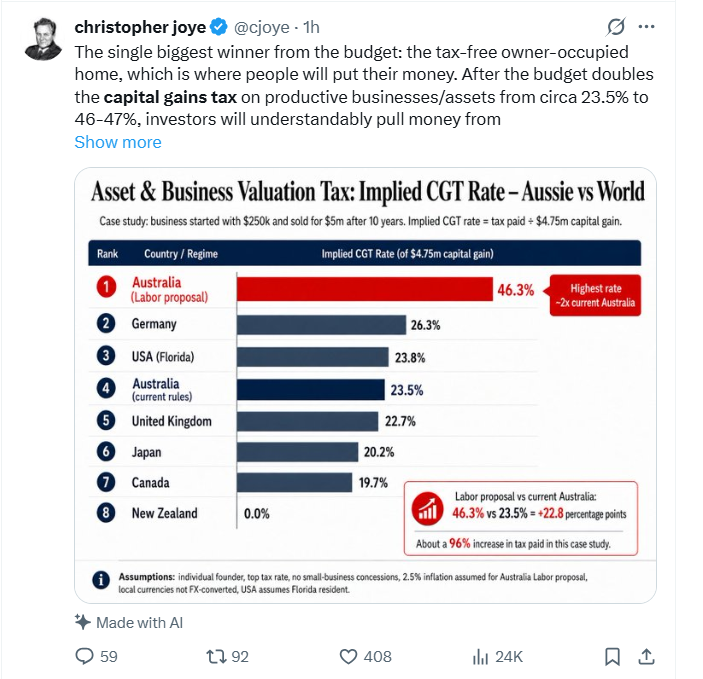
Chris Joye, a portfolio manager at Coolabah Capital Investments and an AFR columnist, criticized the change, arguing in an X post that it would drive Australians out of most forms of investment and into assets with tax incentives, such as housing.
“After the budget doubles the capital gains tax on productive businesses and assets from about 23.5% to 46-47%, investors will understandably pull money from businesses, shares, commercial property and rental housing and plough it into their tax-free owner-occupied home,” he said.
“The single biggest winner from the budget: the tax-free owner-occupied home, which is where people will put their money,” Joye added.
Changes in the federal budget will take effect at the end of the fiscal year in July 2027, with a one-year grace period for assets acquired after May 10. During the transition to a new system, the existing 50% discount will still apply.
Related: Coinbase launches crypto service for Australian retirement funds
The AFR report also notes that assets purchased before May 10 will be partially exempt, with the final capital gains tax discount calculated proportionally based on how long the asset was held under each tax regime.

Source: Chris Joye
Scott Phillips, chief investment officer at investment advice firm The Motley Fool, argued that while investors will likely pay more tax under the changes, they will still make considerable returns and be incentivized for further investments.
“Not for nothing, but when people say a CGT change would hit founders and growth investors, they’re not wrong. But implicit in that argument is that those groups will be making a motza in the first place. That’s all the incentive they will need,” he said.
Magazine: XRP ‘probably going to $12,’ Bitcoin ETFs add $1B: Market Moves