About 60% of users who placed their first World Cup bets on Polymarket had never interacted with blockchain protocols before, suggesting prediction markets are becoming an entry point into crypto.
The finding is based on a 90-day Bitget Wallet study shared with Cointelegraph on Thursday that tracked the onchain activity of 857,000 active Polymarket users.
Bitget Wallet said the findings suggest some users are entering crypto through prediction markets instead of beginning with token trading or DeFi protocols.
Alvin Kan, chief operating officer at Bitget Wallet, told Cointelegraph that earlier crypto onboarding efforts largely focused on making blockchain technology easier to understand through simpler wallets and better user interfaces, but users were still expected to learn how crypto worked before they could participate.
“Prediction markets shifted that dynamic. Users show up because they have a view on something happening in the world,” Kan said.
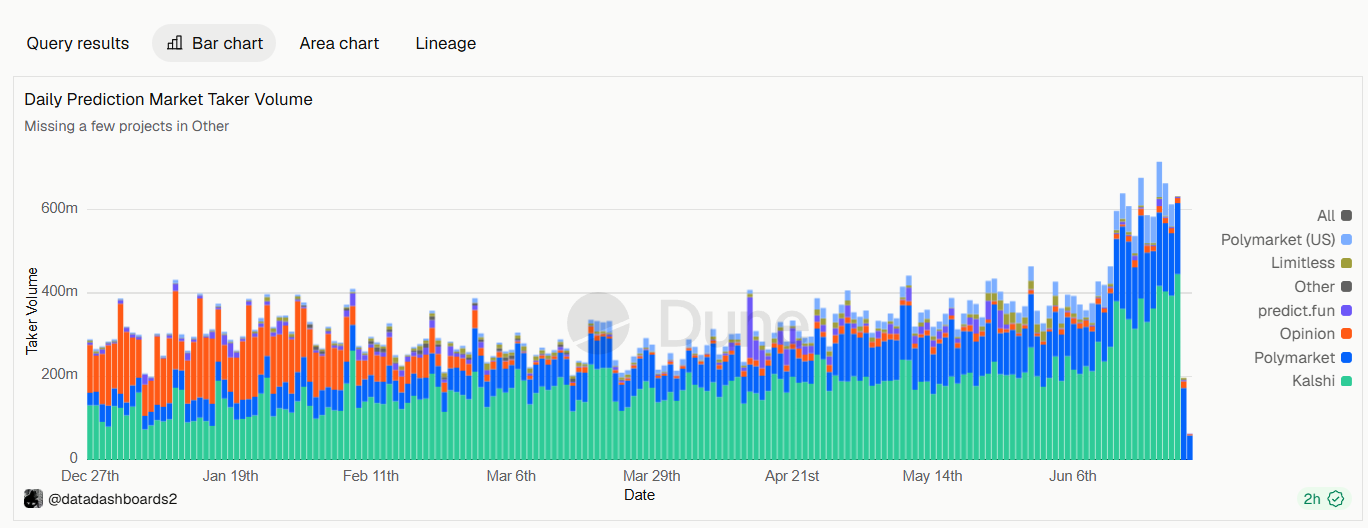
Daily prediction market taker volume. Source: Dune
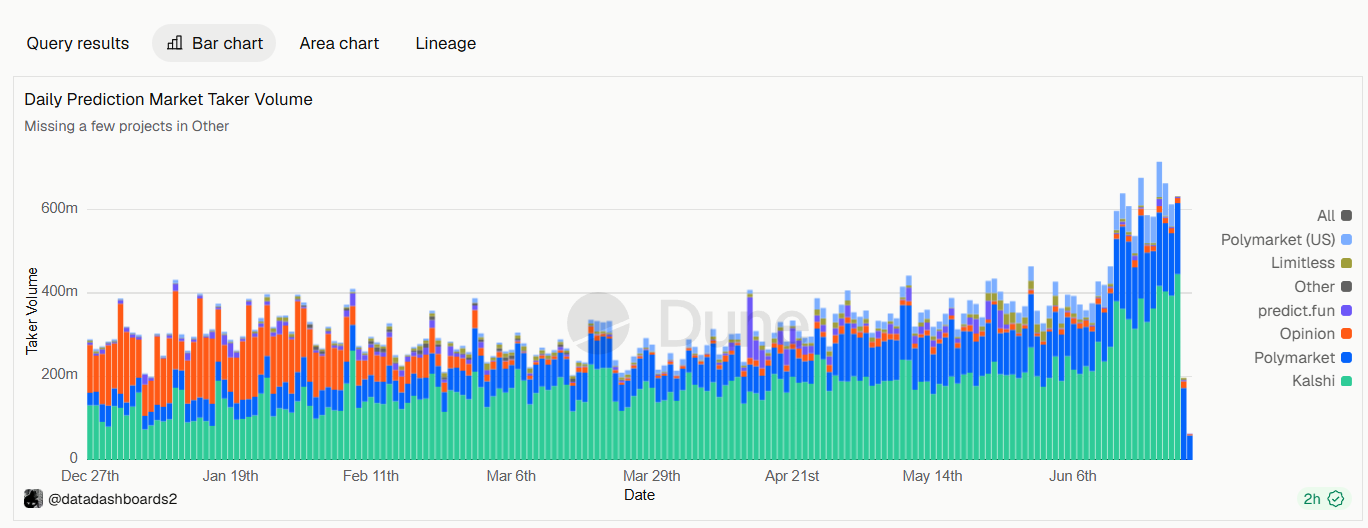
Daily taker volume, which measures contracts bought or sold by traders filling existing orders, reached a record $713 million on Saturday, according to Dune data. The milestone came more than a week after the World Cup kicked off on June 11.
Related: CBOE debuts prediction market with S&P 500 contracts
World Cup contracts drive $3.1 billion in volume to Polymarket
A June 11 Bernstein report predicted that the 2026 FIFA World Cup would generate more than $3 billion in incremental sports betting handle and between $5 billion and $10 billion in additional consumer prediction market volume. The World Cup winner contract alone has generated more than $3.1 billion in trading volume on Polymarket, according to platform data.
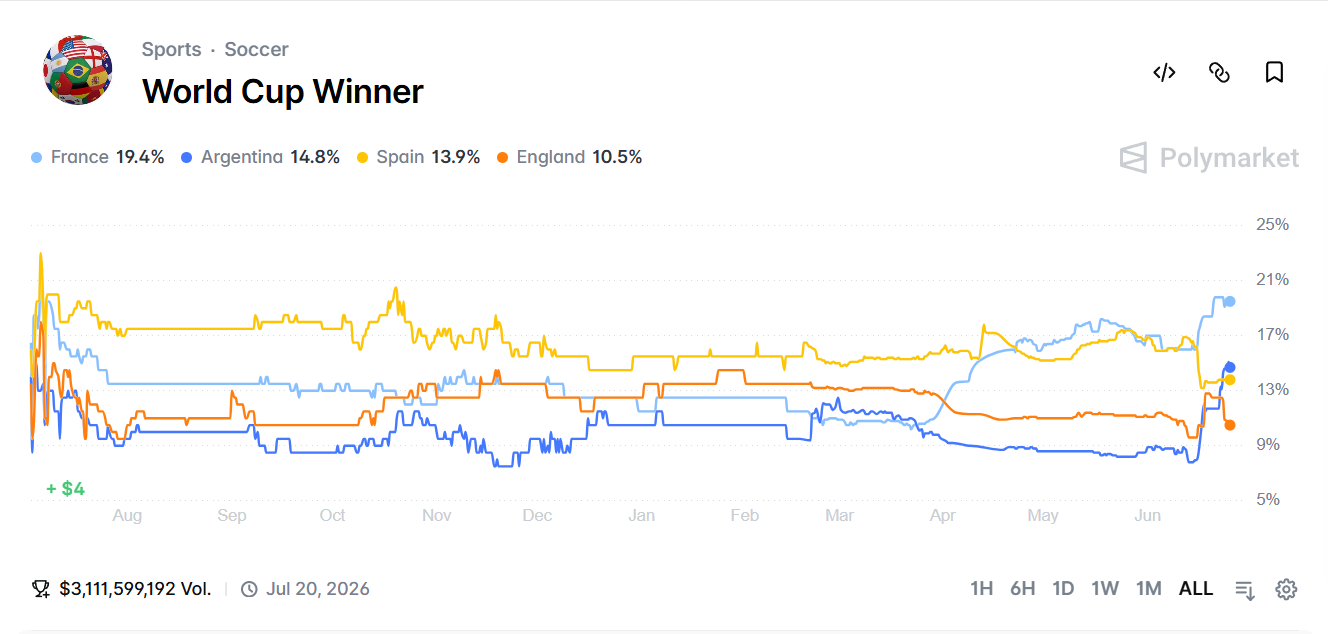
World Cup winner event contract. Source: Polymarket
Sports contracts ranked among the biggest drivers of prediction market trading over the past 30 days. On Kalshi, they generated $8.5 billion over the past 30 days, making them the platform’s largest category. On Polymarket, sports also ranked first with more than $4.9 billion in trading volume during the same period, according to Defirate data.
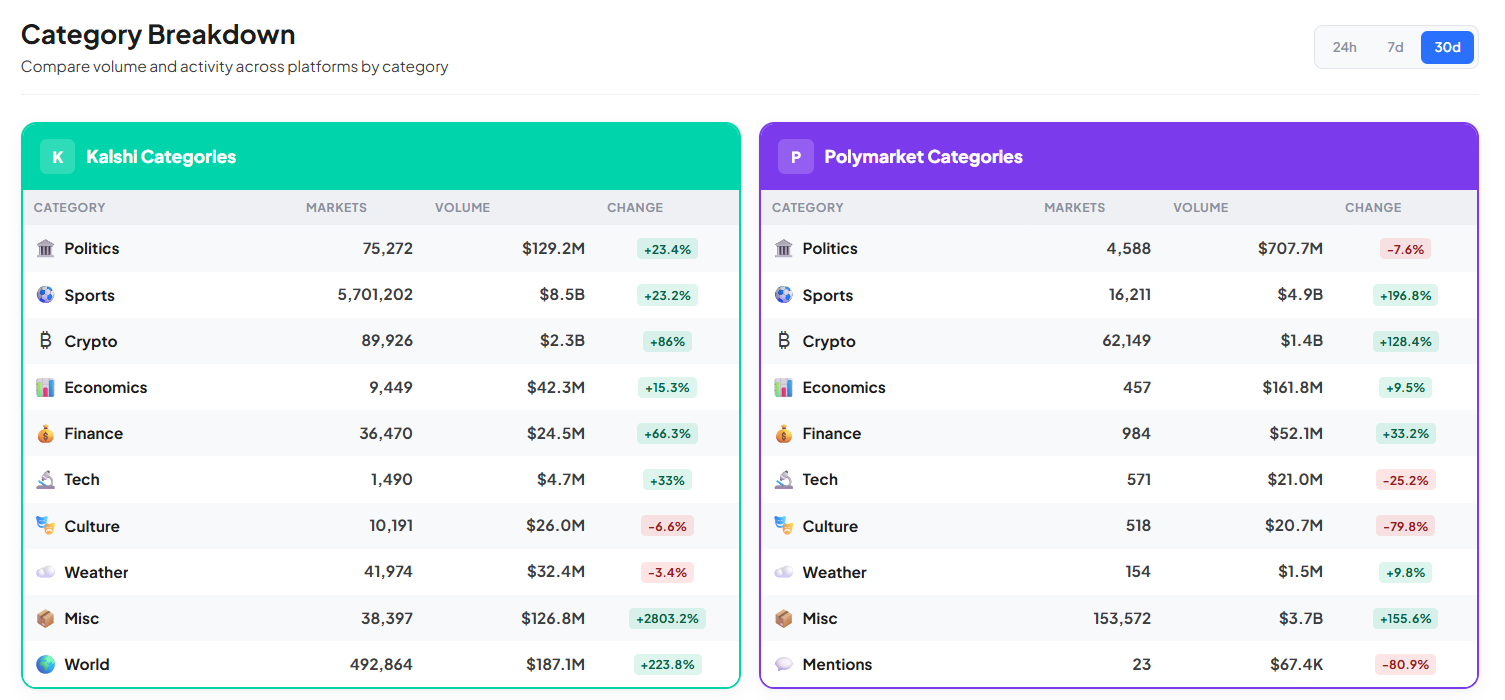
Top categories on Kalshi and Polymarket. Source: Defirate
The surge in sports-related trading has also intensified regulatory scrutiny in the US.
On June 17, Kentucky sued five prediction market platforms, including Kalshi and Polymarket, accusing them of operating unlicensed sports betting platforms. At least 17 other states have taken prediction market operators to court, attracting the involvement of the Commodity Futures Trading Commission and the White House.
The CFTC later sued eight states, arguing they had interfered with the federal regulator’s exclusive authority over federally regulated event contracts.
Magazine: Should users be allowed to bet on war and death in prediction markets?