*APM fights back, goes to court *We’re not discriminating against any party – States *It can cream off 80% of allowed campaign limit
By Omeiza Ajayi
ABUJA – A growing number of state governments are charging presidential candidates tens and even hundreds of millions of naira for the right to display posters and billboards, raising fears that visibility is being priced beyond the reach of opposition parties less than three months to the January 16, 2027 election.
Campaigns for the Presidential and National Assembly polls opened on August 19. By then, several states had already published fee schedules, and the Independent National Electoral Commission, INEC, had cleared 19 presidential candidates.
Abia sets the highest rate. Its signage agency charges N200 million for a presidential candidate, N150 million for a governorship candidate, N100 million for a senatorial candidate, N50 million for the House of Representatives and N20 million for the State Assembly. Enugu and Kogi each demand N150 million from presidential candidates. Cross River is reported at N150 million, Rivers at N75 million and Anambra at N50 million, a five-fold rise on its 2022 presidential fee of N10 million.
The contrast with other states shows how arbitrary the figures are. Kano charges about N1.15 million and draws no distinction between political and commercial billboards. Kaduna assesses fees site by site. Imo asks senatorial candidates for N5 million, plus application and inspection charges.
A question of arithmetic
The sums matter because of the spending ceiling in the Electoral Act 2026, which caps a presidential candidate’s election expenses at N10 billion and a governorship candidate’s at N3 billion. If Abia’s N200 million applied in all 36 states and the Federal Capital Territory, permits alone would cost N7.4 billion, or 74 per cent of the presidential cap, before a single rally, jingle or vehicle is paid for.
The Allied Peoples Movement, APM, and its presidential candidate, Oyo State Governor Seyi Makinde, argue that such fees could consume more than 80 per cent of the ceiling. They have asked the Abia High Court in suit HC/214/2026 to declare the N200 million fee unconstitutional and void. No hearing date had been announced at the last report, and no court has ruled on the legality of any of these fees.
Not simply an APC tyranny
The opposition has described the fees as a ruling-party tactic. The African Democratic Congress, ADC, said they are targeted at the opposition and has vowed to challenge them. The Nigeria Democratic Congress, NDC, said the states involved are mostly controlled by the All Progressives Congress, APC.
But the record is more complicated. The N200 million fee in Abia was imposed by the administration of Governor Alex Otti of the Labour Party, LP. In Oyo, the APC accuses the APM-led state government of directing its signage agency to clamp down on non-APM campaigners. Enugu and Kogi, both APC-controlled, are among the states where the opposition’s complaints are sharpest.
That cuts both ways. It weakens the claim of a single party’s master plan, but it strengthens the broader point that incumbent governments in several parties now control the gate to public advertising space.
What the states say
Governments insist the charges are administrative. Abia says its schedule applies to every party and that it “will not discriminate against any political party or any candidate.”
Kogi State Information Commissioner, Kingsley Fanwo, said the rules bind APC candidates as well, adding that “the government is for everybody.”
Enugu’s APC says it is paying the fee itself. The states cite their powers over physical planning and urban aesthetics, and Abia says a billboard collapse in Aba in 2025 informed its approach.
Critics are not persuaded. A political scientist at Bayero University, Kano, Prof. Kamilu Sani Fage, argues that ruling parties will probably pay with public funds, while opposition candidates pay from their own pockets. Abia’s opposition, the ADC and the PDP, also question whether state agencies have the power to levy these fees at all.
For Prof. Fage, the timing is the problem. “It is wrong to introduce such measures now,” he said.
The Out-of-Home Advertising Association of Nigeria wants states to keep to gazetted tariffs. The Advertising Regulatory Council of Nigeria, ARCON, has said state agencies have no authority to approve political adverts before they are displayed.
Legal gap
The Electoral Act is silent on billboard placement, leaving it to state and local laws, according to a constitutional lawyer, Kehinde Oloje. That gap is what states are using. Opponents point to the Act’s prohibition on using state apparatus to favour or disadvantage any candidate to the spending cap, and to the constitutional rights to free expression and association in sections 39 and 40.
However, states are relying on their Land Use Act powers, even though there are arguments that outdoor advertising fees should be collected by local councils.
Early effects
The impact is already visible. In Lagos, where the signage agency’s rates are not campaign-specific, many opposition candidates had not placed any signboard since campaigns opened. In Imo, the Action People’s Party, APP, says it is paying even though the charges are high. In Abia, the APC governorship candidate, Eric Opah, says “workers, pensioners and traders” will be his billboards rather than paid-space.
The shift matters because billboards are cheap per exposure and durable, which is why politicians favour them. Candidates who cannot afford them are left with radio (especially the private ones), social media and town halls.
Way forward
Stakeholders are asking INEC to issue guidelines separating administrative fees from campaign expenses, and the National Assembly to cap state levies on political advertising. They want states to publish who has paid and who has been waived, and the courts to rule early enough on the matter.
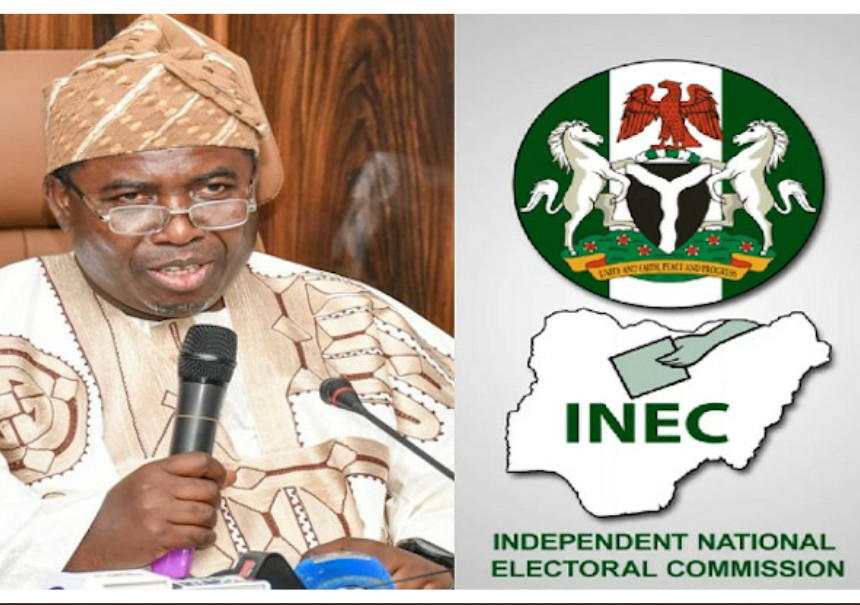
INEC’s chairman, Prof. Joash Amupitan SAN, has said the commission will track illegal campaign spending and that broadcasters must give all parties equal access.