WASHINGTON — Venezuela risks “a second strike” if its interim government doesn’t acquiesce to U.S. demands. Cuba is “ready to fall,” and Colombia is “very sick, too.”
Iran may get “hit very hard” if its government cracks down on protesters. And Denmark risks U.S. intervention, as well, because “we need Greenland,” President Trump said.
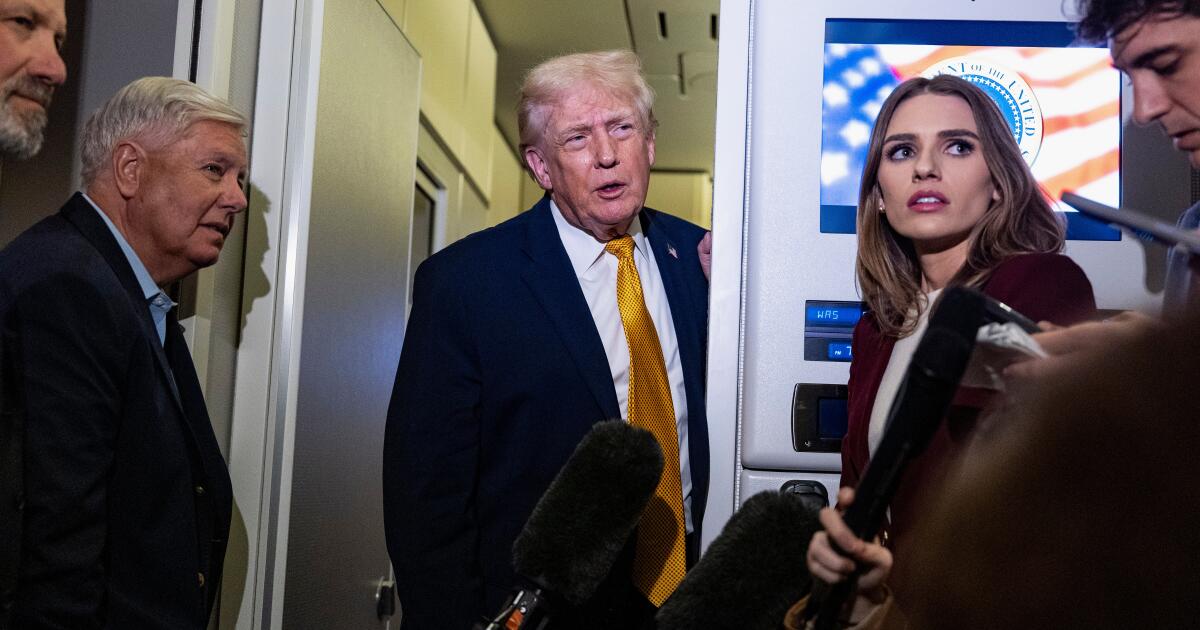
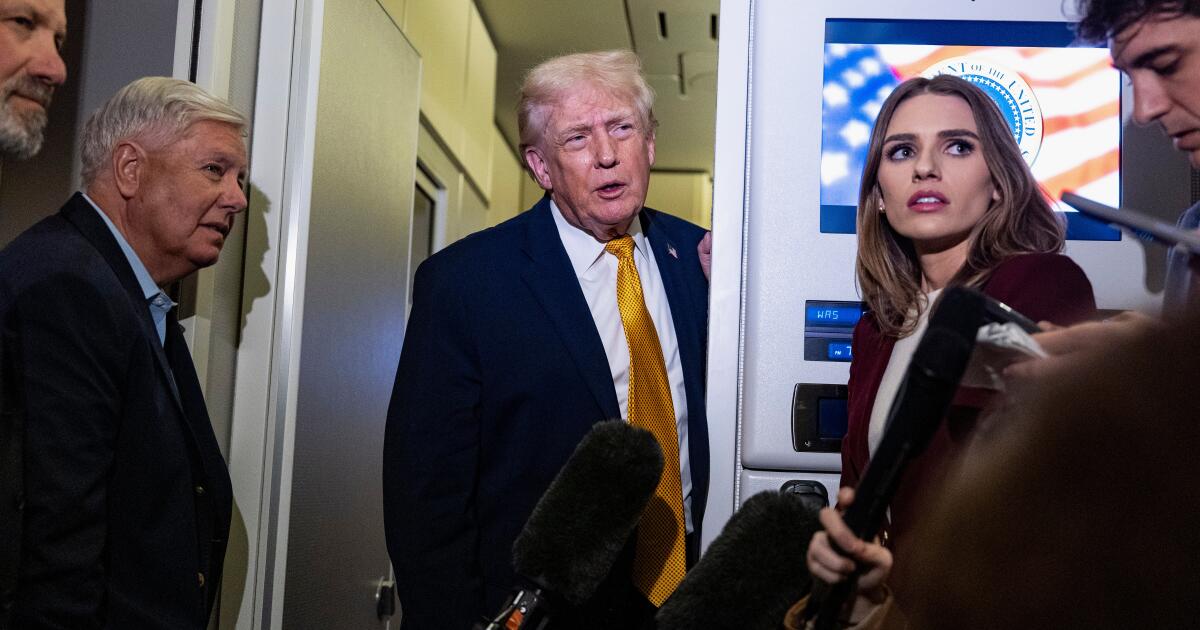
In just 37 minutes while speaking with reporters Sunday aboard Air Force One, Trump threatened to attack five countries, both allies and adversaries, with the might of the U.S. military — an extraordinary turn for a president who built his political career rejecting traditional conservative views on the exercise of American power and vowing to put America first.
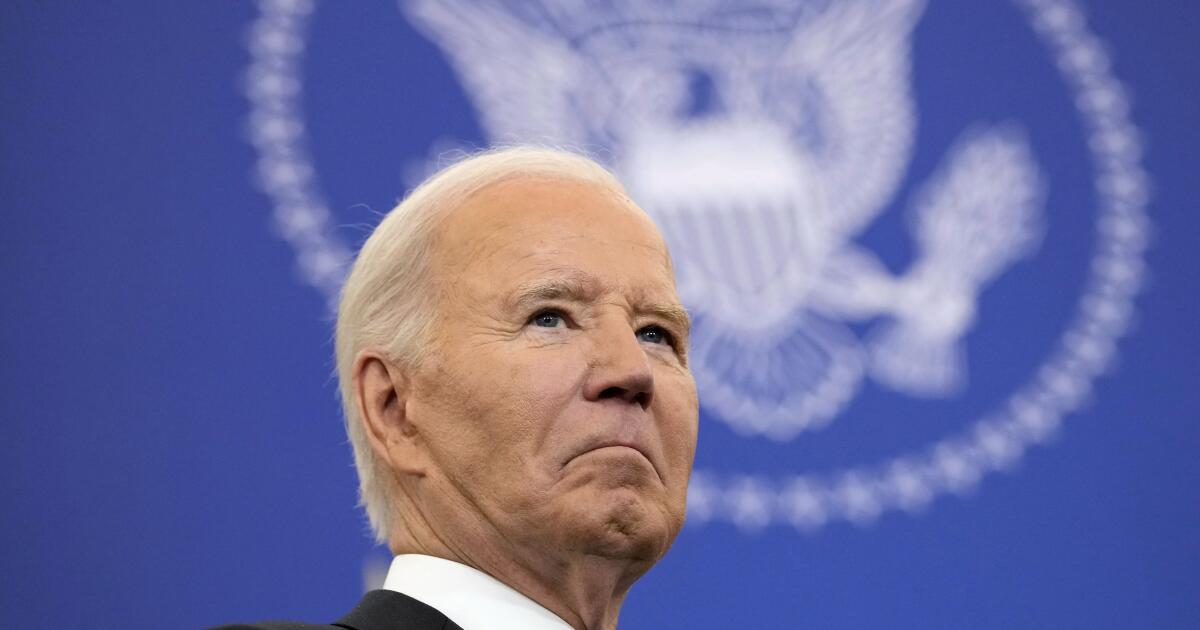
The president’s threats come as a third of the U.S. naval fleet remains stationed in the Caribbean, after Trump launched a daring attack on Venezuela that seized its president, Nicolás Maduro, and his wife over the weekend.
The goal, U.S. officials said, was to show the Venezuelan government and the wider world what the American military is capable of — and to compel partners and foes alike to adhere to Trump’s demands through intimidation, rather than commit the U.S. military to more complex, conventional, long-term engagements.
It is the deployment of overwhelming and spectacular force in surgical military operations — Maduro’s capture, last year’s strikes against Iranian nuclear facilities, assassinations of Islamic State leadership and Iran’s top general in Iraq — that demonstrate Trump as a brazen leader willing to risk war, thereby effectively avoiding it, one Trump administration official said, explaining the president’s strategic thinking.
Yet experts and former Trump aides warn the president’s approach risks miscalculation, alienating vital allies and emboldening U.S. competitors.
At a Security Council meeting Monday at the United Nations in New York — called by Colombia, a long-standing and major non-North Atlantic Treaty Oranization ally to the United States — Trump’s moves were widely condemned. “Violations of the U.N. Charter,” a French diplomat told the council, “chips away at the very foundation of international order.”
Even the envoy from Russia, which has cultivated historically strong ties with the Trump administration, said the White House operation was an act of “banditry,” marking “a return to the era of illegality and American dominance through force, chaos and lawlessness.”
Trump’s threats to annex Greenland, an autonomous territory of the Kingdom of Denmark with vast natural resources, drew particular concern across Europe on Monday, with leaders across the continent warning the United States against an attack that would violate the sovereignty of a NATO ally and European Union member state.
“That’s enough now,” Greenland’s prime minister, Jens-Frederik Nielsen, said after Trump told reporters that his attention would turn to the world’s largest island in a matter of weeks.
“If the United States decides to militarily attack another NATO country, then everything would stop,” Denmark’s prime minister, Mette Frederiksen, told local press. “That includes NATO, and therefore, post-World War II security.”
Trump also threatened to strike Iran, where anti-government protests have spread throughout the country in recent days. Trump had previously said the U.S. military was “locked and loaded” if Iranian security forces begin firing on protesters, “which is their custom.”
“The United States of America will come to their rescue,” Trump wrote on social media on Jan. 2, hours before launching the Venezuela mission. “We are locked and loaded and ready to go. Thank you for your attention to this matter!”
In Colombia, there was widespread outrage after Trump threatened military action against leftist President Gustavo Petro, whom Trump accused, without evidence, of running “cocaine mills and cocaine factories.”
Petro is a frequent critic of the American president and has slammed as illegal a series of lethal U.S. airstrikes against alleged drug boats in the Caribbean and the eastern Pacific.
“Stop slandering me,” Petro wrote on X, warning that any U.S. attempts against his presidency “will unleash the people’s fury.”
Petro, a former leftist guerrilla, said he would go to war to defend Colombia.
“I swore not to touch a weapon again,” he said. “But for the homeland, I will take up arms.”
Trump’s threats have strained relations with Colombia, a devoted U.S. ally. For decades, the countries have shared military intelligence, a robust trade relationship and a multibillion-dollar fight against drug trafficking.
Even some of Petro’s domestic critics have comes to his defense. Presidential candidate Juan Manuel Galán, who opposes Petro’s rule, said Colombia’s sovereignty “must be defended.”
“Colombia is not Venezuela,” Galán wrote on X. “It is not a failed state, and we will not allow it to be treated as such. Here we have institutions, democracy and sovereignty that must be defended.”
The president of Mexico, another longtime U.S. ally and its largest trading partner, has also spoken out forcefully against the American operation in Caracas, and said the Trump administration’s aggressive foreign policy in Latin America threatens the stability of the region.
“We categorically reject intervention in the internal affairs of other countries,” President Claudia Sheinbaum said in her daily news conference Monday. “The history of Latin America is clear and compelling: Intervention has never brought democracy, has never generated well-being or lasting stability.”
She addressed Trump’s comments over the weekend that drugs were “pouring” through Mexico, and that the United States was “going to have to do something.”
Trump has been threatening action against cartels for months, with some members of his administration suggesting that the United States may soon carry out drone strikes on drug laboratories and other targets inside Mexican territory. Sheinbaum has repeatedly said such strikes would be a clear violation of Mexican sovereignty.
“Sovereignty and the self-determination of peoples are non-negotiable,” she said. “They are fundamental principles of international law and must always be respected without exception.”
Cuba also rejected Trump’s threat of a military intervention there, after Trump’s secretary of State, Marco Rubio, himself the descendant of Cuban immigrants, suggested that Havana may be next in Washington’s crosshairs.
“We call on the international community to stop this dangerous, aggressive escalation and to preserve peace,” Cuban President Miguel Díaz-Canel posted on social media.
The U.S. attacks on Venezuela, and Trump’s threats of additional military ventures, have caused deep unease in a relatively peaceful region that has seen fewer interstate wars in recent decades than Europe, Asia or Africa.
It also caused unease among some Trump supporters, who remembered his pledge to get the United States out of “endless” military conflicts for good.
“I was the first president in modern times,” Trump said, accepting the Republican presidential nomination in 2024, “to start no new wars.”
Wilner reported from Washington and Linthicum from Mexico City.