US regulatory developments may unlock a new phase of blockchain adoption in 2026, including sovereign Bitcoin reserves and a broader shift by banks toward tokenized financial infrastructure, according to a report by crypto banking group Sygnum.
The highly anticipated CLARITY Act and potential passage of the Bitcoin Act may provide the legal framework that sovereign actors have been waiting for, Sygnum forecast in a Thursday report shared with Cointelegraph.
The company said clearer rules in the US may inspire more trust in Bitcoin (BTC) as a treasury asset globally, predicting that at least three G20 or G20-equivalent economies will publicly add Bitcoin to their sovereign reserves.
Bitcoin’s economic model favors the earlier adopters, which may lead to more urgency to form national BTC reserves ahead of other countries and purchase Bitcoin at lower prices.
“Once peer competition emerges, reserve diversification becomes a game-theoretic race rather than a philosophical debate.”
Sovereign adoption to help Bitcoin catch up to gold’s market cap
The most plausible early adopters will include financially “pragmatic” countries with “acute currency distress,” such as Brazil, Japan, Germany, Hong Kong and Poland, according to Sygnum.
Brazil’s House of Representatives held a hearing on a national Bitcoin reserve proposal in August 2025. Hong Kong legislators also proposed adding Bitcoin as a national reserve in December 2024.
Related: Bitcoin ETFs on rollercoaster as traditional funds pull in $46B in 2026
Japanese lawmaker Satoshi Hamade proposed in December 2024 that the government create a national Bitcoin reserve by converting part of its foreign exchange reserves, citing the creation of the US strategic Bitcoin reserve.
In October 2025, Germany’s main opposition party, Alternative for Germany (AfD), submitted an official motion to the parliament opposing the overregulation of Bitcoin and urging lawmakers to consider creating a national Bitcoin reserve.
In Poland, former presidential candidate Sławomir Mentzen pledged during his campaign to establish a strategic Bitcoin reserve if elected in 2025, saying the country should become a “cryptocurrency haven” with friendly regulations and supportive banking policies. However, his bid for the presidency was unsuccessful.
The report also predicts modest allocations of up to 1% of the country’s total reserves, but noted that the “signalling effect will be profound.”
Over time, wider sovereign adoption could help Bitcoin narrow the gap with gold, increasing its share of global store-of-value market capitalization from about 6% today to as much as 25%, which Sygnum said would imply a Bitcoin price in the $350,000 to $400,000 range.
However, the optimism around growing sovereign adoption may be “messier” than predictions suggest, according to Marcin Kazmierczak, the co-founder of blockchain oracle company Redstone.
“Bitcoin’s liquid supply has contracted roughly 30% over the last 18 months as ETFs and government holdings absorb new issuance,” but this is largely attributed to institutional accumulation, not sovereign treasuries, he told Cointelegraph, adding:
“For 2026, expect the actual pattern to be more pedestrian than the headlines suggest […]. You’ll see more US states and municipalities exploring reserves, not G20 heavyweights.”
Still, sovereign Bitcoin adoption will remain constrained by “political friction,” including in Brazil, which faces growing pressure from the International Monetary Fund (IMF), Kazmierczak said.
Related: 61% of institutions plan to boost crypto exposure despite October crash: Sygnum
TradFi to adopt blockchain-based token rails for bond issuance
Beyond sovereign adoption, Sygnum said traditional financial institutions are moving closer to using blockchain infrastructure as part of core operations. The firm predicted that tokenization will enter the mainstream in 2026, with up to 10% of new bond issuance by major institutions potentially being tokenized at inception, said Sygnum co-founder and Group CEO, Mathias Imbach.
“The full transition will take five or more years, but the strategic decisions shaping that future are already being made.”
Tokenized bonds, he added, could trade at a premium because of faster settlement and improved collateral efficiency, creating incentives for early adopters.

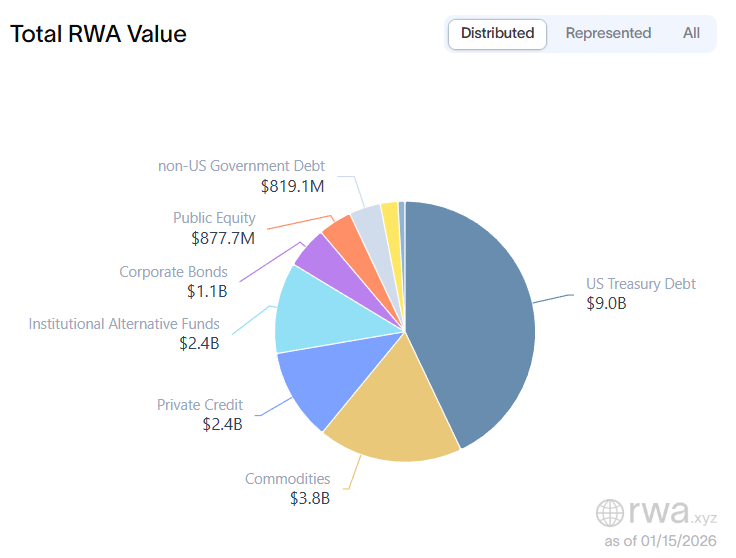
Companies have already tokenized $1.1 billion worth of corporate bonds, representing 5.2% of the total $21 billion in tokenized assets, according to data provider RWA.xyz.
Tokenized bonds are part of the emerging real-world asset (RWA) tokenization sector, which mints financial and tangible assets on the immutable blockchain ledger, decreasing costs while increasing investor accessibility and trading opportunities.
Magazine: Sharplink exec shocked by level of BTC and ETH ETF hodling — Joseph Chalom